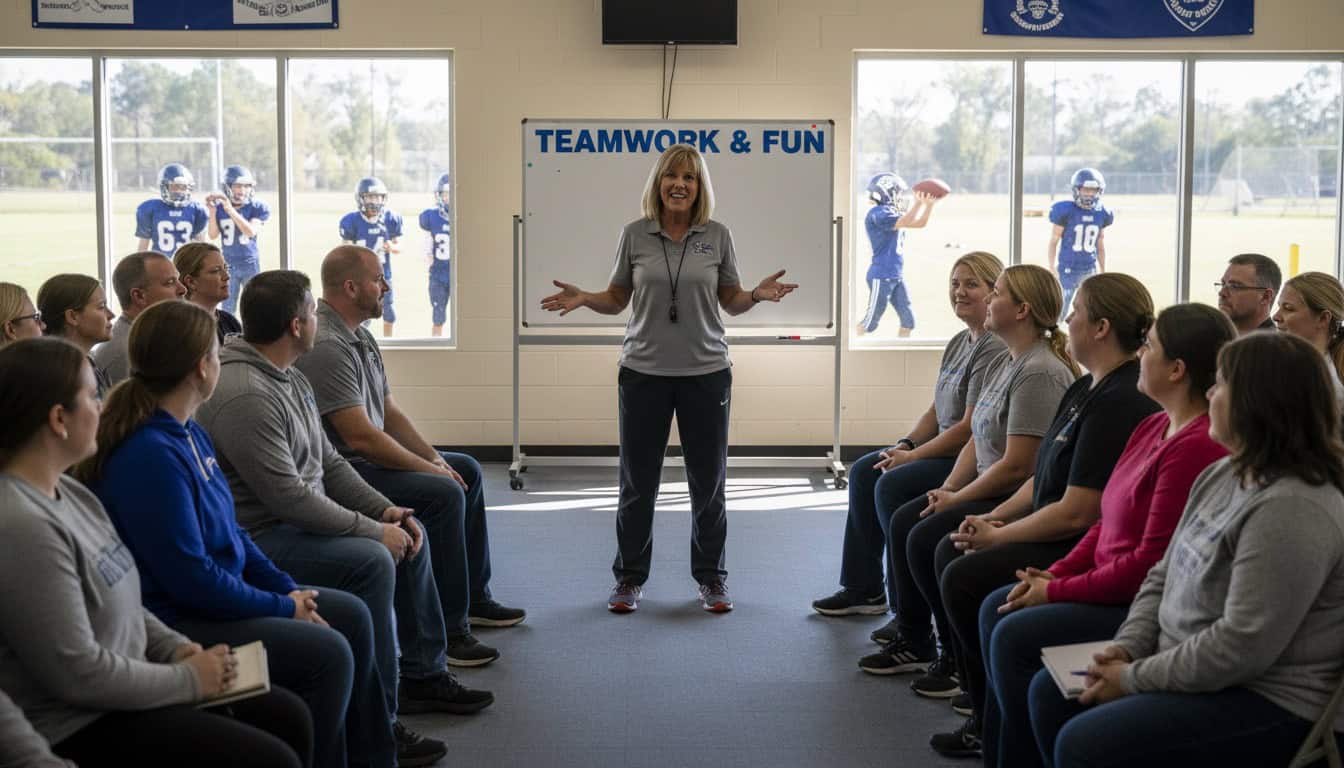
Managing parent expectations starts with clear communication before issues arise. Set expectations at the beginning of the season through parent meetings and written guidelines. Address the development-versus-winning balance explicitly, explain your playing time philosophy, and establish sideline behavior standards. When concerns arise, listen first, respond calmly, and focus on the child's experience rather than defensive positions.
Key Takeaways
- Set expectations early — Pre-season parent meetings prevent most conflicts
- Communicate proactively — Regular updates reduce anxiety and speculation
- Focus on the child — Every conversation should center on player welfare and development
Why Parent Management Matters
The Reality of Youth Football
Parents are deeply invested in their children's activities. This investment comes from love, but it can create challenges.
Common parent concerns:
- Is my child getting enough playing time?
- Is my child developing properly?
- Is my child being treated fairly?
- Is the coaching good enough?
- Is my child safe and happy?
These are legitimate concerns. Problems arise when anxiety drives behavior or when expectations don't match reality.
The Impact of Poor Parent Relations
When parent relationships go wrong:
On children:
- Stress from parental pressure
- Confusion between coach and parent messages
- Reduced enjoyment
- Premature dropout from sport
On coaches:
- Time consumed by conflicts
- Stress and burnout
- Distraction from coaching
- Loss of volunteers
On the team:
- Toxic sideline atmosphere
- Cliques and divisions
- Other families leave
- Reputation damage
The Opportunity
Well-managed parent relationships create:
- Supportive match-day atmosphere
- Volunteer pool for team needs
- Positive word-of-mouth recruitment
- Children who enjoy their football
- Sustainable coaching experience
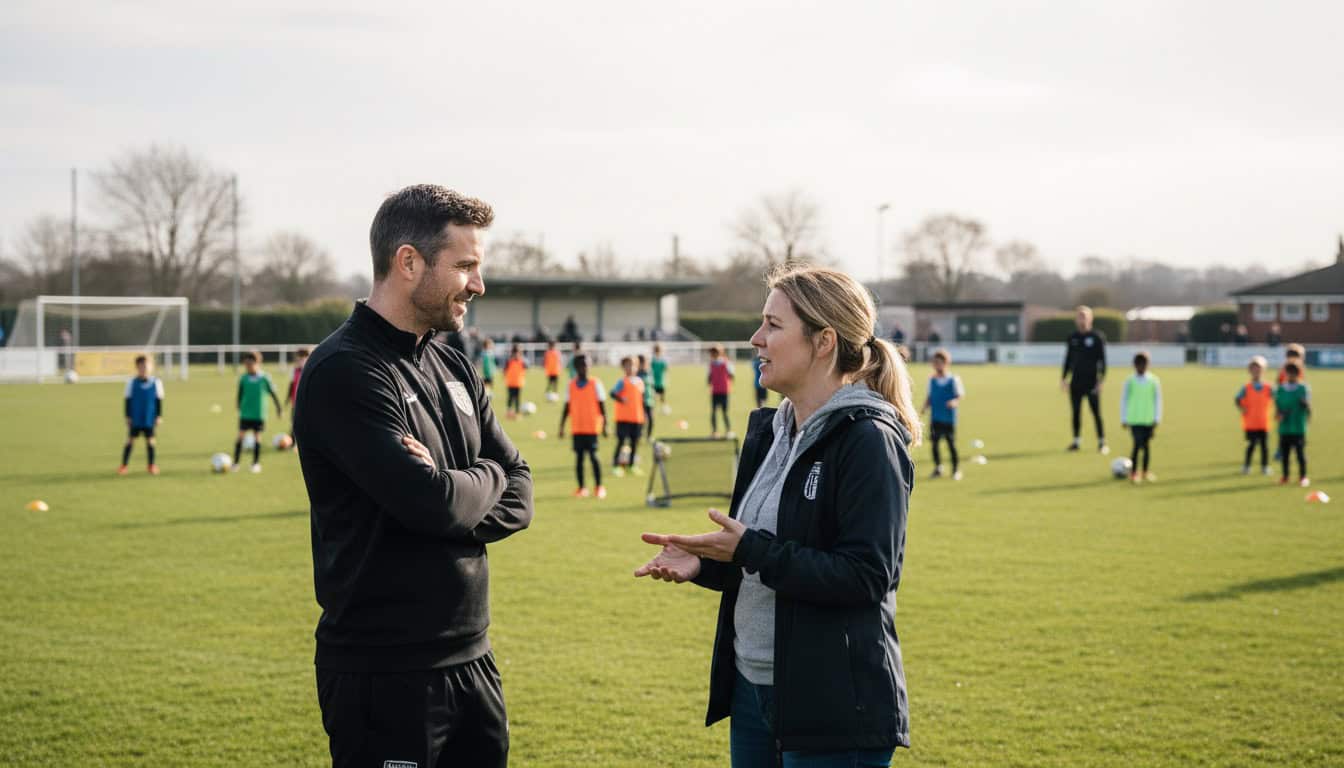
Setting Expectations from the Start
The Pre-Season Parent Meeting
Purpose: Establish shared understanding before the season begins.
When: Before first match, after initial training sessions.
Who attends: All parents/guardians—make attendance expected, not optional.
What to cover:
1. Your philosophy
- Development focus vs. results
- What success looks like at this age
- How you approach coaching
- Why you volunteer
2. Playing time expectations
- Your approach to playing time
- How decisions are made
- What's guaranteed, what's earned
- Age-appropriate considerations
3. Behavior standards
- Sideline expectations
- How to communicate with coaches
- What's not acceptable
- Consequences for violations
4. Communication
- How you'll communicate
- When and how to contact you
- What's appropriate to discuss
- 24-hour rule for concerns
5. Practical matters
- Fixtures and schedule
- Fees and payments
- Kit requirements
- Volunteer needs
The Parent Agreement
Document expectations in writing:
Include:
- Code of conduct for sidelines
- Communication protocols
- Playing time philosophy
- Contact guidelines
- Consequences for violations
Get acknowledgment:
- Signature or digital acceptance
- Reference point for future discussions
- Demonstrates commitment
"I understand that:
- Playing time is not guaranteed and varies based on development needs
- I will support all players positively from the sideline
- I will not approach the coach during or immediately after matches about concerns
- I will use the 24-hour rule before raising issues
- Coaching decisions are made by coaches, not parents"
Playing Time: The Central Issue
Why Playing Time Causes Conflict
Playing time is the most common source of parent-coach tension:
- Parents see it as measure of their child's value
- Comparison with other children is natural but problematic
- Expectations often don't match child's current ability
- Development needs aren't always understood
Communicating Your Philosophy
Be explicit about your approach:
"At this age group, our priority is development and enjoyment. Every player will get meaningful playing time every match. This doesn't mean equal minutes—players in different development stages need different experiences. I'll always ensure your child has opportunities to play, learn, and enjoy."
Age-appropriate frameworks:
| Age Group | Typical Approach |
|---|---|
| U7-U9 | Equal or near-equal time; everyone plays every position |
| U10-U12 | Balanced time; some position specialization begins |
| U13-U15 | Merit increasingly factors; positions more defined |
| U16+ | Competitive selection; time reflects ability and commitment |
Handling Playing Time Complaints
Listen first:
- Hear the concern fully
- Acknowledge their feelings
- Don't become defensive
Explain your reasoning:
- Share your observations
- Explain development considerations
- Be honest but kind
Redirect to development:
- What can the player work on?
- How can they earn more time?
- What progress have you seen?
Example Response
"I understand you'd like to see [child] play more in central midfield. At the moment, I'm developing their defensive awareness in wider positions where there's less pressure. This is building skills that will help them play centrally later. They're progressing well—here's what I've noticed improving..."

Sideline Behavior
Setting the Standard
Acceptable:
- Positive encouragement for all players
- Applause for good play (both teams)
- Support in appropriate volume
- Enjoyment of the occasion
Not acceptable:
- Coaching from the sideline
- Criticism of players (any team)
- Challenging referee decisions
- Negative comments about opponents
- Confrontation with other parents
Communicating Expectations
In parent meeting:
"Our sideline should sound like encouragement, not instruction. Your job is to cheer; my job is to coach. Shouting instructions confuses players who are trying to follow the game plan. Positive noise only, please."
In written guidelines:
"Sideline code: Cheer, don't coach. Support, don't instruct. Encourage all players. Respect referees, opponents, and each other."
Addressing Poor Behavior
In the moment:
- Brief, calm intervention
- "Let's keep it positive, please"
- Remove yourself if needed
After the match:
- Private conversation
- Describe specific behavior
- Explain impact on children
- Request change
- Document if necessary
Example Conversation
"I noticed you were quite vocal with the referee today. I understand the frustration, but the children pick up on that energy, and it affects their experience. Can we agree to keep sideline comments positive going forward?"
Escalation if needed:
- Second incident: formal warning
- Third incident: match-day exclusion
- Ongoing issues: club involvement
Ready to find matches?
Join verified teams finding friendly matches in minutes, not days.
Communication Strategies
The 24-Hour Rule
The principle: No discussions about match events until 24 hours have passed.
Why it works:
- Emotions cool down
- Perspective improves
- Knee-jerk complaints avoided
- Better conversations result
How to implement:
Explain in pre-season meeting and include in parent agreement. Remind parents when they approach immediately after matches: "I'd be happy to discuss that—can we talk tomorrow when we've both had time to reflect?"
Regular Communication
Reduce anxiety through information:
Weekly/match updates:
- Upcoming fixture details
- Training focus
- Team news
- Positive highlights
Monthly/periodic:
- Development progress (general)
- Upcoming schedule
- Volunteer needs
- Team achievements
Communication Channels
| Channel | Use For |
|---|---|
| Group chat/app | Logistics, quick updates, positive news |
| Formal communication, sensitive matters | |
| Phone | Urgent issues only |
| In person | Scheduled conversations about their child |
Boundaries:
- Don't discuss other children
- Keep conversations at appropriate times
- Respond promptly but not instantly
- Maintain professional distance
Handling Difficult Conversations
When Parents Raise Concerns
Framework:
- Listen actively — Let them speak fully. Don't interrupt or defend. Show you're hearing them.
- Acknowledge feelings — "I understand this is frustrating." "I can see you're concerned about [child]." Validation isn't agreement.
- Ask questions — "Can you tell me more about what you've observed?" "What would you like to see differently?" Understand their perspective fully.
- Share your perspective — Explain your observations. Provide context they may not have. Focus on the child's development.
- Find common ground — "We both want [child] to enjoy and improve." Identify shared goals. Agree on next steps.
- Follow up — Do what you said you'd do. Check in after changes. Maintain the relationship.
Common Difficult Scenarios
"My child should play more"
- Acknowledge their wish to see their child play
- Explain your development reasoning
- Discuss what the child can work on
- Commit to ensuring meaningful participation
"My child should play a different position"
- Explain your positional development approach
- Share what you're trying to develop
- Listen to their observations
- Consider their input while maintaining coaching authority
"You're being unfair"
- Ask for specific examples
- Explain your reasoning for decisions
- Acknowledge if you could have done something differently
- Reiterate your commitment to all players
"Other parents are saying..."
- Don't engage with second-hand concerns
- Ask them to speak only for themselves
- Encourage others with concerns to approach you directly
- Avoid being drawn into politics
When to Escalate
Some situations need club/organization involvement:
- Aggressive or threatening behavior
- Repeated violations despite warnings
- Safeguarding concerns
- Complaints you can't resolve
- Personal attacks or harassment
Document everything and involve your welfare officer or club officials.
Building Positive Relationships
Engaging Parents Constructively
Volunteer involvement:
- Give parents meaningful roles
- Team admin, match coordination, kit management
- Invested parents are supportive parents
- Channel energy positively
Social connection:
- Post-match refreshments
- End-of-season events
- Parent-player activities
- Build community beyond just matches
Celebrating children:
- Share positive observations
- Recognize effort and improvement
- Thank parents for their support
- Create positive associations
Individual Parent Relationships
Regular positive contact:
- Brief comments about their child's progress
- Notice things beyond football
- Remember personal details
- Show you see their child as an individual
Example Positive Touchpoint
"[Child] showed great leadership today—helped a teammate who was struggling and kept encouraging them. That character will serve them well whatever they do in football."
The Difficult Parent
Some parents will always be challenging:
Strategies:
- Kill with kindness (not sarcasm)
- Document interactions
- Keep conversations factual
- Don't take it personally
- Maintain professional boundaries
- Involve support when needed
Remember:
- Their behavior is about them, not you
- Their child didn't choose their parent
- Your job is the children's experience
- Some relationships can't be fixed
Special Situations
The Over-Invested Parent
Signs:
- Lives through child's football
- Excessive pressure on child
- Never satisfied with performance
- Compares child to others constantly
Approach:
- Private conversation about child's wellbeing
- Share research on parent pressure effects
- Focus on enjoyment indicators
- Involve welfare officer if concerned
The Absent Parent
Challenge: Communication doesn't reach them; child may be affected.
Approach:
- Multiple communication channels
- Direct contact when important
- Ensure child isn't disadvantaged
- Be understanding of circumstances
The Expert Parent
Signs:
- Questions every decision
- Offers constant advice
- "When I played..."
- Undermines authority subtly
Approach:
- Acknowledge their experience
- Explain your approach and reasons
- Maintain coaching authority firmly
- Channel expertise constructively if genuine
Split Families
Considerations:
- Communication to both parents if appropriate
- Neutral position in disputes
- Child's welfare as priority
- Consistent information to both
How This Relates to Other Topics
Frequently Asked Questions
How do I handle a parent who constantly criticizes from the sideline?
Address it privately after the match. Describe the specific behavior, explain the impact on children, and request change. If it continues, implement your escalation policy—warning, then exclusion.
What if parents disagree with my playing time decisions?
Listen to their concerns, explain your development-focused reasoning, and redirect to what their child can work on. Make clear that coaching decisions are yours to make, but you welcome understanding their observations.
Should I guarantee equal playing time for youth players?
At younger ages (U9 and below), near-equal time is generally appropriate. As children get older, playing time can reflect commitment and development needs. Be explicit about your philosophy so expectations are set.
How do I stop parents from coaching during matches?
Set the expectation clearly: 'Cheer, don't coach.' Remind them that conflicting instructions confuse children. If it continues, address individually. Consider a parents-behind-a-line arrangement if space allows.
When should I involve the club in parent issues?
When behavior is aggressive or threatening, when your interventions haven't worked, when safeguarding concerns exist, or when you need support. Document issues and escalate through proper channels.
How do I balance being approachable with maintaining boundaries?
Be warm and available, but have clear times and methods for communication. Use the 24-hour rule, don't discuss concerns immediately after matches, and keep conversations appropriately professional.
What if a parent complains about me to the club?
Cooperate with any process, provide your perspective calmly with documentation, and trust the system. Don't retaliate or allow it to affect your treatment of the child.
How do I handle a parent who thinks their child is better than they are?
Sensitively provide honest feedback focused on development areas. Use specific examples. Frame improvement areas positively. Avoid comparing to other children.
Should I communicate with parents individually about their children?
Yes—brief positive touchpoints build relationships. Be careful about discussing other children. Keep feedback focused on development, not comparison.
What's the best response when a parent is angry?
Stay calm. Listen without interrupting. Acknowledge their feelings without agreeing. Take a break if needed: 'I can see you're upset—let's continue this conversation tomorrow when we've both had time to think.'
Ready to find your next match?
Join verified teams finding opponents in minutes.
Create your free accountNo credit card required