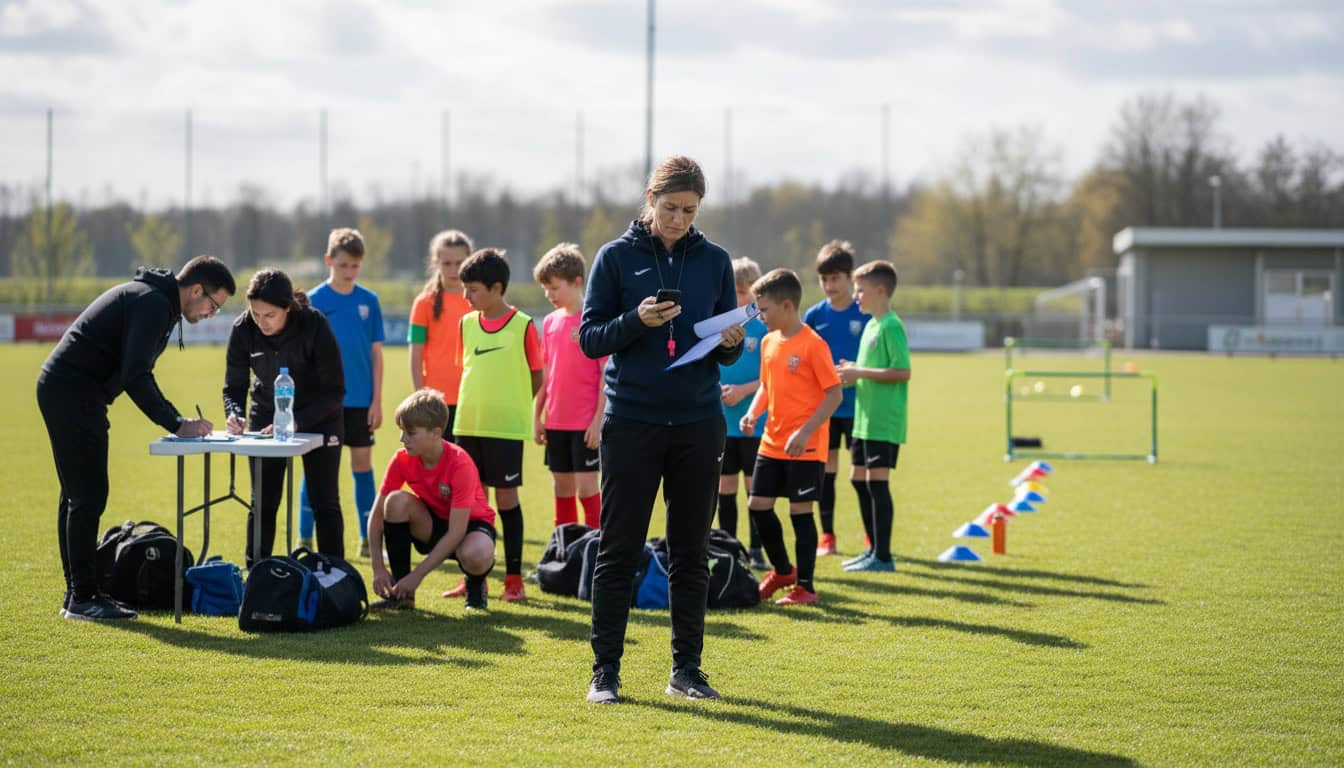
Managing player availability effectively requires consistent processes, clear expectations, and persistent follow-up. Request availability early (7-10 days minimum), use simple response methods, chase non-responders systematically, and set consequences for chronic poor communication. The teams that rarely struggle with availability have built a culture where responding promptly is the norm, not the exception.
Key Takeaways
- Consistency builds habits — Same process, same timing, same expectations every week
- Make responding easy — The simpler the method, the higher the response rate
- Address problems early — Chronic non-responders need direct conversation, not endless chasing
Why Availability Management Matters
The Ripple Effects of Poor Availability Data
When you don't know who's coming, everything becomes harder. Selection problems cascade into match day chaos. Players end up in wrong positions, reliable players feel undervalued, and you waste hours chasing responses instead of focusing on actual football.
The consequences extend beyond logistics:
- Selection problems: Can't plan team or tactics, last-minute changes disrupt preparation
- Match day chaos: Too many or too few players, scrambling for callups
- Squad morale issues: Reliable players feel undervalued, standards slip across the board
- Your time wasted: Hours chasing responses instead of preparing for matches
The Well-Managed Alternative
Teams with strong availability culture enjoy predictable numbers every week, time for proper planning, calm and organized match days, players who feel respected, and sustainable management workload.

Setting Up Your System
Choosing Your Method
Select based on what players actually use. The key principle is one method, used consistently—don't split across multiple channels.
| Method | Pros | Cons | Best For |
|---|---|---|---|
| Team app (Spond, TeamSnap) | Purpose-built, tracks history | Requires adoption | Tech-comfortable squads |
| WhatsApp poll | Everyone has it, simple | Manual tracking, messy threads | Casual teams |
| Google Form | Free, flexible, auto-compiles | Extra step to access | Mixed tech comfort |
| Group chat replies | Very easy | Hard to track, gets buried | Small squads |
| Formal record | Low response rates | Older demographics |
The Availability Request
What to include in every request:
- Match details (date, time, opponent, venue)
- Response deadline
- Response options (Yes/No/Maybe with explanation)
- How to respond
- What happens if no response
"Match: Saturday 15th Feb, 2pm kickoff vs Riverside FC (away)
Please confirm availability by Wednesday 8pm:
Available / Unavailable / Maybe (explain situation)
Reply to this message or use the app. No response by deadline = assumed unavailable."
Response Deadlines
Set deadlines that give you planning time:
| Match Day | Deadline | Rationale |
|---|---|---|
| Saturday | Wednesday evening | 48+ hours to plan and chase |
| Sunday | Thursday evening | Same planning window |
| Midweek | Sunday evening | Several days to organize |
Collecting Responses Effectively
Timing Your Requests
When to send initial request:
- 7-10 days before match for regular fixtures
- Earlier for fixtures requiring travel or special arrangements
- Same day/time each week builds routine
Reminder sequence:
- Initial request: 7-10 days out
- First reminder: 3-4 days out (to non-responders)
- Final chase: 1-2 days out (individual messages)
- Deadline enforcement: Close responses, make decisions
Making Responses Easy
Remove friction from responding:
- Single click/tap responses where possible
- Clear, simple options
- Mobile-friendly methods
- Quick acknowledgment of responses
Avoid These Mistakes
Don't require logging into systems, ask for lengthy explanations for "no," make it hard to change responses, or ignore responses when received.
Handling Different Response Types
"Yes" responses: Acknowledge receipt, confirm any specific requirements (early arrival, driving, etc.), include in planning.
"No" responses: Accept without interrogation, note for planning, no guilt-tripping, track patterns over time.
"Maybe" responses: Request explanation and timeline for decision, set deadline for final answer, plan as if "no" until confirmed.
No response: Chase once individually, after deadline treat as "no," note pattern for later conversation.

Building an Availability Culture
Setting Expectations from Day One
New players should understand availability expectations immediately. Include this in your onboarding conversation:
"We ask for availability by Wednesday for Saturday matches. We expect responses—even if it's 'no.' No response by deadline means we assume you're unavailable and plan accordingly. If you can't commit to this communication standard, this might not be the right team for you."
Modeling the Standard
As manager, demonstrate the behavior you want:
- Communicate fixture details promptly
- Send availability requests on schedule
- Respond to player messages quickly
- Follow through on stated consequences
- Thank people who respond promptly
Positive Reinforcement
Reward good communication. Public acknowledgment helps: "Thanks to everyone who responded quickly this week—makes my job much easier."
Tangible benefits:
- Prompt responders get selection priority for competitive matches
- Reliable communicators considered for leadership roles
- Good availability record noted when players need flexibility
Addressing Poor Communication
When players consistently fail to respond, escalate progressively:
- First instance: Gentle reminder, benefit of doubt
- Second instance: Direct message asking if system works for them
- Third instance: Private conversation about expectations
- Ongoing pattern: Clear consequences (selection impact, team meeting discussion)
Ready to find matches?
Join verified teams finding friendly matches in minutes, not days.
Handling Common Challenges
The Chronic Non-Responders
Some players never seem to respond despite reminders. Possible causes include not seeing messages (wrong channel), forgetting (need different reminder timing), avoiding commitment (deeper issue), or not understanding importance (need education).
Approach:
- Private conversation to understand why
- Offer alternative response methods if needed
- Explain impact on team and your time
- Set clear expectations going forward
- Follow through on consequences
"I've noticed you rarely respond to availability requests. I want to understand why—is there something about the system that doesn't work for you? I need responses to plan properly, and the current situation isn't sustainable."
The Serial "Maybe"
Players who never commit either way create problems: can't plan around them, often becomes "no" at last minute, takes squad place from definite players.
The solution: Set deadline for "maybe" to become yes or no. After deadline, treat as "no." If pattern continues, explain they need to commit or not be selected.
The Late Changers
Occasional late changes happen—handle gracefully. Frequent late changes need addressing:
- Note the pattern privately
- Discuss in non-confrontational way
- Explain impact on team planning
- Ask what would help them commit more reliably
- Consider whether this player fits your team's needs
The Last-Minute Hopefuls
Players who don't respond then expect to play need clear policy: no response by deadline equals assumed unavailable. Squad selected from confirmed available players. Late responders can be added if space exists. Chronic late responders face consequences.
Communication template: "We had to finalize the squad by Thursday. Since you didn't confirm availability, you weren't included. Happy to add you to the bench if there's space, but priority goes to those who responded on time."
Planning with Availability Data
Building Your Match Day Squad
Once responses are in:
Definite available: Form core of selection, plan starting lineup and bench, assign specific roles.
Maybe (pending): Don't rely on for starting positions, use for bench depth if confirmed, have backup plan if they withdraw.
Not available: Note reasons if relevant to future planning, consider for next fixture.
Managing Squad Size
Target response rate: 80%+ of squad responding by deadline
Typical squad math:
- 25-player squad
- 80% response rate = 20 responses
- 70% of responders available = 14 players
- Need 14-16 for comfortable match day
If numbers too low: Callup list of reserves, network contacts for emergency cover, consider match format adjustments.
If numbers too high: Manage expectations about playing time, rotate across fixtures where possible, be transparent about selection criteria.
Tracking Patterns Over Time
Keep simple records of availability and response rates. Use this data for end-of-season reviews, selection decisions for important matches, conversations about commitment, and squad composition decisions.
Tools and Automation
Team Management Apps
Purpose-built solutions handle availability well:
- Spond: Easy availability requests, automatic reminders, response tracking, free basic version
- TeamSnap: Availability with RSVP, email and push notifications, schedule integration, paid plans with more features
- Heja: Simple interface, good for parents and players, free core features, calendar integration
DIY Solutions
If not using dedicated apps:
- Google Forms + Sheets: Create weekly form, responses auto-compile, manual reminder process, free and flexible
- WhatsApp Business: Polls for availability, broadcast lists for reminders, everyone already has it, manual tracking required
Automation Opportunities
Reduce manual work with:
- Scheduled availability requests (same time weekly)
- Automatic reminder sequences
- Response compilation dashboards
- Non-responder identification
Communication Templates
Weekly Availability Request
AVAILABILITY: [Opponent] - [Date]
Kickoff: [Time]
Venue: [Location]
Meet: [Time/Place]
Please confirm by [Deadline]:
Available / Unavailable / Maybe (explain)
[Link/instructions for responding]
First Reminder (Non-Responders)
"Hi all, still need availability from: [Names]
Match is [Date] vs [Opponent]. Please confirm by [Deadline] so I can plan the squad. Thanks!"
Final Chase (Individual)
"Hi [Name], I still need your availability for Saturday. Can you let me know by tonight? If I don't hear, I'll assume you're not available. Thanks"
Deadline Enforcement
"Availability closed. Squad selected from those who confirmed. If you didn't respond and want to be considered, let me know—but priority goes to confirmed players."
Frequently Asked Questions
What's a realistic response rate to expect for availability requests?
Aim for 80%+ responses by deadline with a well-run system. Under 60% indicates process or culture problems that need addressing.
How do I handle players who only respond if the answer is yes?
Explicitly request 'no' responses too. Explain that not responding creates planning problems. Set expectation that no response equals unavailable.
Should I chase availability responses individually or in the group?
Both. Group reminders for efficiency, individual messages for persistent non-responders. Don't publicly name and shame—it damages relationships.
What if a player confirms availability then doesn't show up?
First time: check they're okay, understand what happened. Repeat occurrence: direct conversation about reliability. Ongoing pattern: selection consequences.
How early is too early to request player availability?
For regular weekly fixtures, 7-10 days is appropriate. Earlier requests get forgotten; later requests don't leave planning time.
Should I explain to players why availability responses matter?
Yes, especially for new players or when changing systems. People comply better when they understand the impact of their response or non-response.
How do I handle a player who's rarely available but wants to stay in the squad?
Honest conversation about mutual expectations. Can you accommodate occasional players? Do they understand they may not get selected when available? Find arrangement that works or part ways.
What consequences are appropriate for chronic non-responders?
Selection deprioritization is the clearest consequence. For important matches, reliable communicators should get priority. Explain this policy upfront so it's not punitive when applied.
Should availability communication affect selection for otherwise reliable players?
Communication reliability can be a selection factor alongside ability, attitude, and attendance. Teams function better when everyone contributes to the organizational culture.
How do I reset poor availability culture in an existing team?
Acknowledge the issue, explain the new expectations clearly, implement the system consistently, follow through on consequences, and give it a season to embed. Culture change takes time.
Ready to find your next match?
Join verified teams finding opponents in minutes.
Create your free accountNo credit card required