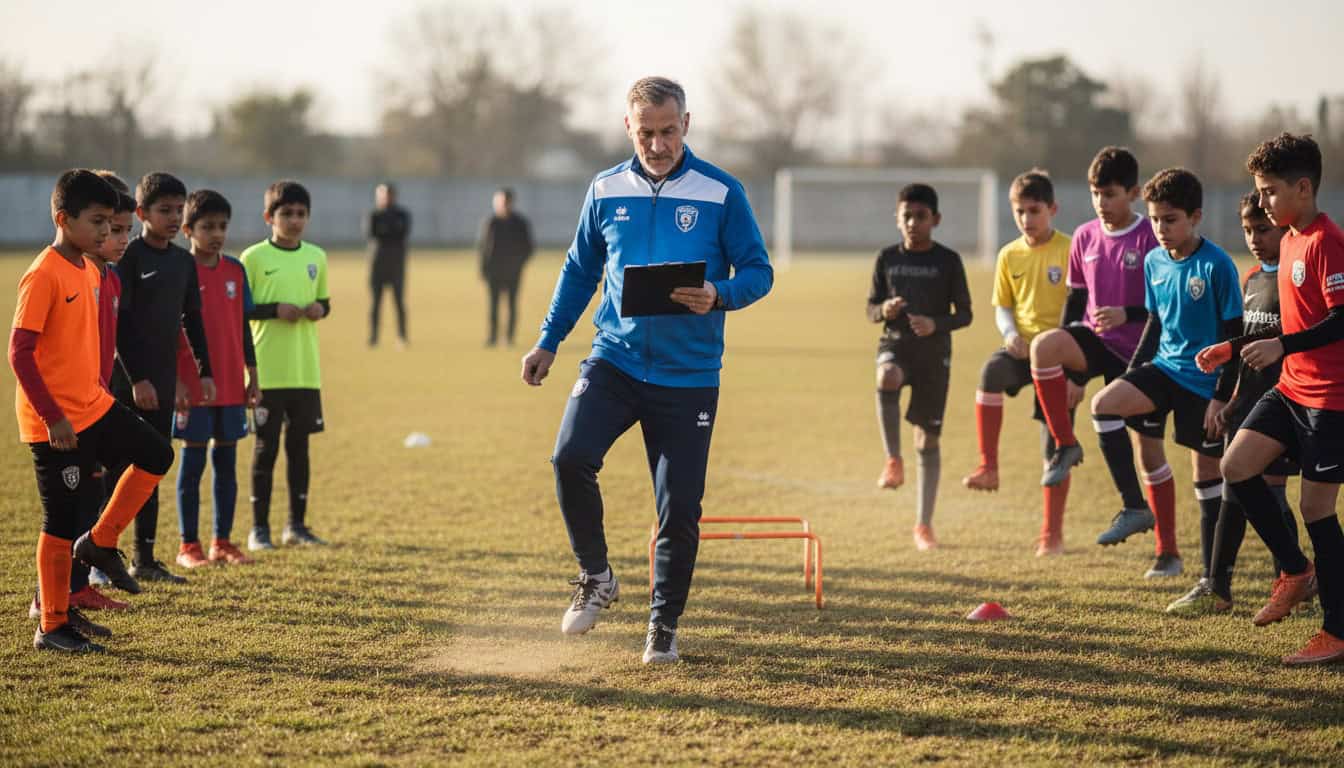
Transition from playing to managing by embracing your new perspective from the touchline, building management skills separate from playing ability, and establishing clear boundaries with former teammates—while recognizing that your playing experience is a foundation, not a blueprint, for effective leadership.
Key Takeaways
- Shift your focus: Success now means team results and player development, not personal performance
- Build new skills: Administration, communication, and organization matter as much as tactical knowledge
- Establish boundaries: Your relationships with players must evolve to support your authority
The Challenges of Becoming a Manager
Moving from player to manager is one of the most significant transitions in grassroots football. The skills that made you a good player don't automatically make you a good manager—and the relationships you built as a teammate need to evolve.
Common challenges include:
- Identity shift: Your value is no longer measured by your own performance
- Relationship changes: Former teammates are now your responsibility
- Skill gaps: Playing football and managing football require different abilities
- Perspective change: You see the game differently from the touchline
- Time demands: Management involves far more work than playing
Understanding these challenges upfront helps you navigate them successfully.

Why Good Players Sometimes Struggle as Managers
The Expertise Trap
Great players often struggled to understand why others couldn't do what came naturally to them. As a manager, you must:
- Recognize that your playing ability was developed over time
- Explain concepts you might have understood instinctively
- Value players whose strengths differ from your own
- Appreciate different paths to effectiveness
The Doing vs Delegating Shift
As a player, you solved problems on the pitch. As a manager:
- You influence through others, not direct action
- Your decisions happen before and between matches
- You can't run onto the pitch and fix things yourself
- Patience replaces immediate personal intervention
The Relationship Reset
Your friendships with players don't disappear, but they must evolve:
- You make decisions that affect their playing time
- You must give feedback they might not want to hear
- Favoritism (real or perceived) undermines your authority
- Social dynamics shift when you're "the boss"
Developing Your Management Identity
Finding Your Style
You don't need to copy other managers. Develop an approach that's authentic to you:
Consider your strengths:
- Are you a natural communicator?
- Do you have strong tactical understanding?
- Are you organized and detail-oriented?
- Do you connect well with people one-on-one?
Acknowledge your gaps:
- What aspects of management feel uncomfortable?
- Where do you need support or development?
- What skills do you need to build?
Build your philosophy:
- What matters most to you as a manager?
- How do you want players to feel about being in your team?
- What kind of football do you want to play?
- How will you define success?
Separating Player and Manager Identities
If you're still playing while managing (common in grassroots football):
During matches:
- Appoint a captain who leads on the pitch
- Don't manage while playing—focus on one role at a time
- Accept substitution without argument
- Trust others to communicate your instructions
In selection:
- Be honest about your own form and fitness
- Don't guarantee yourself a starting spot
- Be willing to drop yourself if it's best for the team
- Separate your playing ego from management decisions
Building Credibility Beyond Playing Ability
Your credibility as a manager comes from:
- Preparation: Being organized and ready
- Fairness: Treating everyone consistently
- Communication: Keeping players informed
- Results: Achieving team objectives (not just winning)
- Development: Helping players improve
- Reliability: Following through on commitments
These matter more than how well you could once play.

Managing Former Teammates
The Authority Challenge
Players who knew you as an equal may struggle with your new role:
Establish early:
- Have direct conversations about the change
- Explain how relationships need to evolve
- Acknowledge the adjustment for everyone
- Be clear about expectations
Avoid:
- Expecting automatic respect
- Pulling rank unnecessarily
- Being defensive about decisions
- Pretending the history doesn't exist
Handling Difficult Conversations
You'll need to give feedback and make decisions your friends won't like:
Be direct:
- Don't soften messages so much they lose meaning
- Deliver difficult news promptly, not just before matches
- Focus on behaviors and outcomes, not personalities
Be private:
- Handle sensitive conversations one-on-one
- Don't call out individuals in front of the group
- Give people space to process and respond
Be consistent:
- Apply the same standards to close friends and newer players
- Don't let history excuse current behavior
- Make decisions based on team benefit, not personal loyalty
When Friendships Are Tested
Accept that some relationships may change:
- Not everyone will be happy with your decisions
- Some players may leave because of the dynamic shift
- You can't be everyone's friend and their manager
- The team's interests must come first
Genuine friendships usually survive the adjustment. Those that don't were perhaps less solid than you thought.
Ready to find matches?
Join verified teams finding friendly matches in minutes, not days.
Skills to Develop as a New Manager
Administration and Organization
| Skill | Why It Matters |
|---|---|
| Calendar management | Fixtures, training, deadlines |
| Communication systems | Keeping everyone informed |
| Record keeping | Player information, results, contacts |
| Budget tracking | Costs, payments, balances |
| Compliance | League rules, safeguarding, insurance |
You probably didn't think about these as a player. They're now essential.
Communication Skills
Team communication:
- Pre-match briefings and post-match debriefs
- Training session instructions
- General team updates and information
Individual communication:
- Giving feedback and coaching
- Having difficult conversations
- Supporting players through challenges
External communication:
- Negotiating with opponents
- Liaising with league officials
- Working with club committees
Decision Making
As a manager, you make constant decisions:
- Selection and substitutions
- Tactical approach
- Handling discipline issues
- Resource allocation
- Time management
Develop a decision-making approach:
- Gather relevant information
- Consider options and consequences
- Make the decision
- Communicate it clearly
- Own the outcome, good or bad
Emotional Intelligence
Understanding and managing emotions—yours and others':
- Recognizing when players need support vs challenge
- Managing your own frustrations
- Reading team mood and dynamics
- Adapting your approach to different personalities
Learning and Development
Formal Qualifications
Consider pursuing coaching and management qualifications:
- FA Playmaker: Free introduction to coaching
- FA Level 1: Foundation coaching certificate
- FA Level 2: More advanced coaching skills
- FA Safeguarding: Essential for working with any age group
- First Aid: Practical requirement for match days
Informal Learning
Observe other managers:
- Watch how experienced managers operate
- Notice what works and what doesn't
- Ask questions when you have the opportunity
Seek mentorship:
- Find an experienced manager willing to advise
- Join manager networks or forums
- Learn from others' mistakes and successes
Reflect regularly:
- What went well this week?
- What would you do differently?
- What did you learn?
Resources and Support
- FA Learning: Courses and resources
- Club network: Other managers in your club
- Online communities: Forums and social media groups
- Books and content: Management and coaching materials
Common Mistakes to Avoid
Trying to Be Everyone's Friend
You want players to like you, but:
- Popularity and respect aren't the same thing
- Difficult decisions are part of the job
- Consistency matters more than being liked
- Players respect fairness, even when decisions go against them
Micro-Managing on the Pitch
Trust your players during matches:
- Constant shouting undermines confidence
- Players need space to make decisions
- Your role is preparation; theirs is execution
- Intervention should be selective and purposeful
Taking Everything Personally
Not everything is about you:
- Players have lives outside football
- Poor performances have many causes
- Criticism isn't always personal attack
- Results reflect team efforts, not just your management
Avoiding Difficult Decisions
The hardest parts of management are unavoidable:
- Selection means some players miss out
- Feedback means telling people what they need to improve
- Standards mean addressing behavior that falls short
- Leadership means making unpopular calls
Avoiding these erodes your credibility and team standards.
Doing Everything Yourself
You don't have to be a one-person operation:
- Delegate to assistant managers
- Use volunteers for specific tasks
- Involve senior players appropriately
- Ask for help when you need it
The First Season Checklist
Before the Season
- Define your role clearly
- Establish communication channels
- Meet with players individually
- Set team expectations
- Build your support structure
- Complete necessary qualifications
- Understand administrative requirements
During the Season
- Maintain consistent standards
- Communicate regularly
- Gather and give feedback
- Adapt when needed
- Document lessons learned
- Seek support when challenged
End of Season
- Review overall performance
- Have individual conversations with players
- Identify development areas
- Plan for next season
- Reflect on your growth
Remember
Most new managers find their first season is primarily learning. By the second season, you'll feel more comfortable. Full confidence often takes 2-3 seasons to develop.
Frequently Asked Questions
Should I still play while managing?
It's possible but challenging. Many grassroots managers do both successfully. The key is separating the roles mentally and not letting your playing ego affect management decisions.
How do I handle a player who doesn't accept my authority?
Have a direct, private conversation about expectations. Listen to their concerns. Be clear about standards. If they can't accept your role, they may need to find another team.
What if I'm managing players who are better than me?
Your job isn't to be the best player—it's to get the best from all players. Focus on organization, development, and team environment. Technical ability isn't the only source of credibility.
How long does the transition take?
Most new managers find their first season is primarily learning. By the second season, you'll feel more comfortable. Full confidence often takes 2-3 seasons to develop.
What's the hardest part of the transition?
Most former players say it's the relationships—navigating friendships while maintaining authority, and accepting you can't directly control what happens on the pitch.
How do I deal with players who were at my level questioning my decisions?
Stay calm and confident. Explain your reasoning once, but don't over-justify. Your decisions are yours to make; you don't need approval from every player.
Should I tell the team about my management philosophy?
Yes, communicate what matters to you and how you'll approach the role. Players should understand your values and expectations from the start.
What if I'm not naturally organized?
Develop systems that work for you, use technology to help, and consider delegating administrative tasks to someone who enjoys them.
How do I balance being approachable with maintaining authority?
Be friendly and open, but be consistent about standards. You can have warm relationships while still making tough decisions and holding people accountable.
What's the best advice for a new player-manager?
Embrace that you're learning a new role. Be patient with yourself. Ask for help. Focus on the team's success rather than proving yourself. And remember why you took this on—presumably because you love the game and want to contribute.
Ready to find your next match?
Join verified teams finding opponents in minutes.
Create your free accountNo credit card required