
Plan your season by working backward from key dates—league start, cup deadlines, and holiday breaks—then build a month-by-month calendar covering preseason preparation, competitive fixtures, friendly matches, and end-of-season activities to stay organized throughout the year.
Key Takeaways
- Map your calendar: Identify all fixed dates (league matches, cup rounds, holidays) first
- Plan preseason properly: Allow 4-6 weeks for fitness, friendlies, and squad building
- Build in flexibility: Leave space for postponements, rescheduled fixtures, and unexpected events
Why Season Planning Matters
A well-planned season runs smoothly. A poorly planned one lurches from crisis to crisis—cancelled fixtures, unavailable players, venue clashes, and rushed decisions.
Effective season planning delivers:
- Better preparation: Players know what's coming and can plan accordingly
- Fewer surprises: You've anticipated challenges before they become problems
- Improved performance: Proper periodization supports player development and fitness
- Reduced stress: You're proactive rather than constantly reactive
- Stronger relationships: Opponents, venues, and officials are booked in advance
This guide provides a month-by-month framework for grassroots team managers in England, adaptable to your specific circumstances.
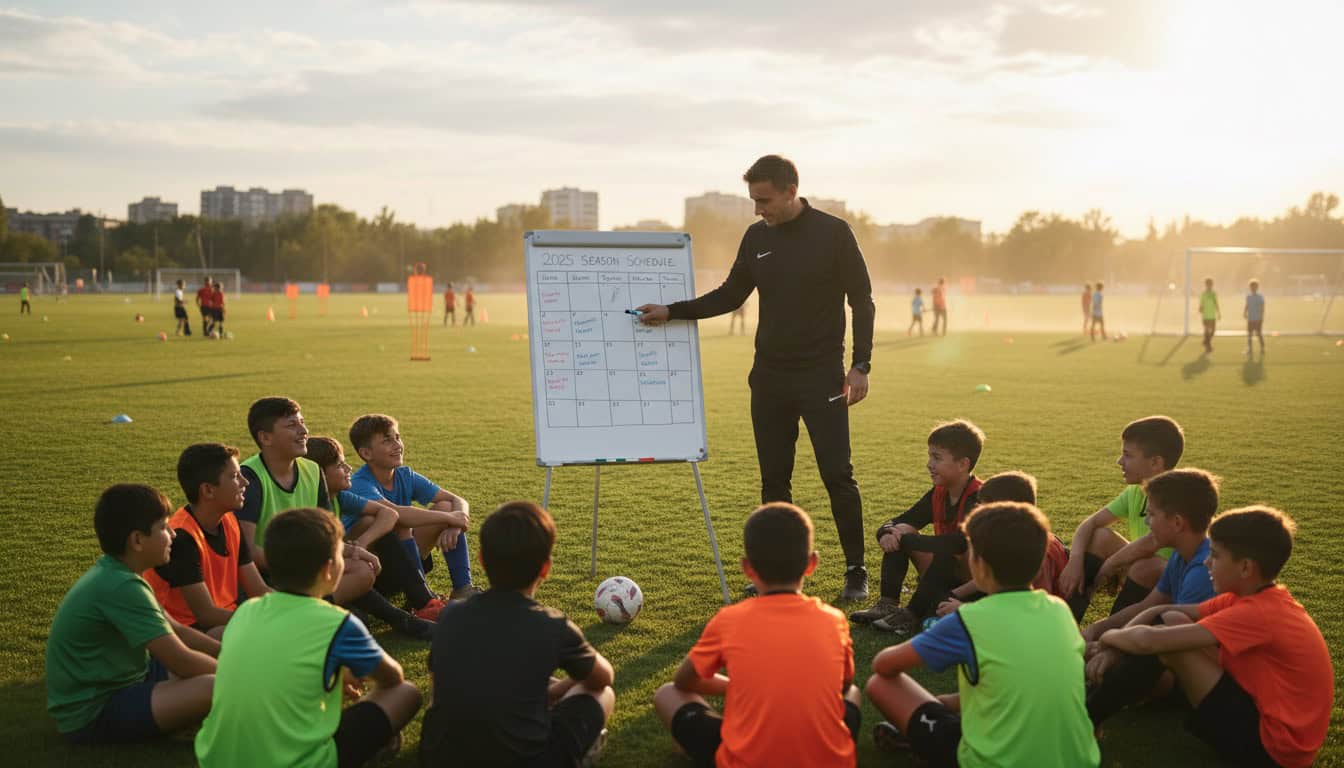
Season Overview: The Football Calendar
Typical English Football Season Structure
| Period | Months | Focus |
|---|---|---|
| Preseason | July - August | Fitness, friendlies, squad building |
| Early Season | September - October | Finding rhythm, settling lineup |
| Mid-Season | November - January | Winter challenges, cup runs |
| Late Season | February - April | Title/promotion push, avoiding relegation |
| End of Season | May | Final matches, awards, planning ahead |
| Off-Season | June | Rest, recruitment, reflection |
Youth football often runs September to May with term-time breaks.
Month-by-Month Planning Guide
June: Off-Season Foundation
Administrative tasks
- Review last season's performance and learnings
- Confirm your role and commitment for the upcoming season
- Check league registration deadlines and requirements
- Verify insurance coverage and safeguarding compliance
Squad planning
- Contact existing players about return intentions
- Identify recruitment needs
- Begin reaching out to potential new players
- Plan trials or assessment sessions if needed
Financial preparation
- Set season budget
- Establish subscription rates
- Plan fundraising if required
- Confirm sponsorship arrangements
Key dates to set
- Preseason training start date
- First friendly match
- League registration deadline
July: Preseason Launch
Training focus
- Begin preseason training (typically early-mid July)
- Focus on base fitness in early sessions
- Gradually increase intensity over the month
- Integrate new players into the squad
Friendlies
- Arrange 2-3 preseason friendlies for July
- Start with lower-intensity opposition
- Focus on fitness and experimentation over results
- Test different formations and lineups
Administration
- Complete league registration
- Submit squad lists as required
- Book venues for training and home matches
- Confirm referee arrangements for the season
Squad finalization
- Complete any trials
- Make final recruitment decisions
- Assign squad numbers if applicable
- Order/distribute kit
July Checklist
- Preseason training underway
- League registration complete
- First friendlies played
- Squad largely finalized
- Home venue confirmed
- Budget set and communicated
August: Competition Preparation
Training focus
- Increase tactical work
- Fine-tune starting lineup
- Work on set pieces
- Build match fitness through competitive training
Friendlies
- Final 2-3 preseason friendlies
- Choose opposition that tests you appropriately
- Use matches to finalize selection decisions
- Final dress rehearsal before competitive season
August Checklist
- Final preseason friendlies completed
- Starting lineup taking shape
- Opening fixtures confirmed
- All registrations and eligibility complete
- Travel plans for away matches set
- Team communication channels active
September: Season Kickoff
Match focus
- Opening league fixtures
- Early cup rounds (check entry deadlines)
- Establish competitive rhythm
- Early season points crucial
Training adjustments
- Move to in-season training pattern
- Recovery focus after matches
- Address issues emerging from early games
- Maintain fitness while managing workload
October: Finding Your Rhythm
Match focus
- Continue league programme
- Early cup progress
- Potential for midweek fixtures
- League table positions becoming clearer
Planning ahead
- Winter schedule preparation
- Identify potential weather-affected fixtures
- Book indoor facilities for backup training
- Plan for darker evening training
November: Winter Transition
Match challenges
- Weather postponements become more likely
- Earlier darkness affects midweek training
- Pitch conditions deteriorating
- Player availability affected by illness
Contingency planning
- Backup venues identified (3G pitches)
- Indoor training options confirmed
- Communication plan for postponements
- Rescheduling strategy ready
December: Festive Period Management
Fixture considerations
- Reduced availability around Christmas
- Potential fixture congestion before break
- Weather postponements accumulating
- Evening fixtures challenging
Player communication
- Confirm holiday availability early
- Set expectations for training attendance
- Plan for reduced squad options
- Social event for team bonding
January: New Year Reset
Fresh start opportunities
- Mid-season review and adjustments
- Address issues from first half of season
- Reinforce standards after break
- Set goals for remainder of season
Recruitment window
- Identify squad gaps needing reinforcement
- Execute any January signings
- Integrate new players quickly
- Release players if necessary
Ready to find matches?
Join verified teams finding friendly matches in minutes, not days.
February: Push Phase
Season stakes rising
- Title races developing
- Relegation battles clarifying
- Cup runs becoming significant
- Every match feels important
Squad management
- Manage workload with fixture congestion
- Rotation to prevent burnout
- Key player protection
- Keep fringe players engaged
March: Critical Period
Maximum intensity
- Season objectives becoming clear
- Every result magnified
- Pressure at peak
- Character tested
Focus areas
- Concentration on detail
- Recovery and preparation maximized
- Team unity reinforced
- Individual and collective accountability
April: Run-In
Season conclusion approaching
- Final league fixtures
- Cup finals and late rounds
- Season awards being decided
- Outcomes becoming inevitable
Next season preparation
- Player reviews scheduled
- Retention conversations continuing
- Recruitment needs crystalized
- Budget planning for next year
May: Season Conclusion
Final activities
- Last matches of the season
- Presentations and awards
- End of season social events
- Season wrap-up communications
Administrative completion
- Final results submitted
- Player records finalized
- Equipment inventory and storage
- Financial year-end if applicable
May Checklist
- Season completed
- Awards presented
- Equipment stored properly
- Thank-yous communicated
- Next season outline in place
Creating Your Season Calendar
Step 1: Mark Fixed Dates
Plot these first:
- League fixtures
- Cup dates and deadlines
- School holidays (youth teams)
- Bank holidays
- Personal commitments
Step 2: Add Preparation Time
Work backward from competitive start:
- 4-6 weeks preseason training
- 3-5 preseason friendlies
- Time for trials if needed
- Administrative completion deadlines
Step 3: Build in Flexibility
Leave space for:
- Postponements (assume 2-4 per season)
- Additional cup rounds if successful
- Unplanned opportunities
- Recovery periods
Step 4: Communicate and Share
Distribute your calendar:
- Players and parents
- Coaching staff
- Venue managers
- Other stakeholders
Tools for Season Planning
Physical Tools
- Large wall calendar for overview
- Diary for detailed appointments
- Whiteboard for weekly planning
- Notice board for team communication
Digital Tools
- Google Calendar (shareable, accessible)
- Team management apps (TeamSnap, Teamer, Spond)
- Spreadsheets for detailed tracking
- Team Game Finder for fixture management
How This Relates to Team Management
Season planning connects to your broader management approach:
- Team Manager Responsibilities: Planning is a core duty
- Finding Opponents for Friendlies: Preseason planning detail
- Building Your Network: Opponent relationships throughout season
Frequently Asked Questions
How far ahead should I plan?
Map the whole season in outline, with detailed planning 4-6 weeks ahead. Update monthly as fixtures confirm and circumstances change.
What if my league doesn't publish fixtures until late?
Plan around known dates (cup rounds, holidays) and build flexible windows for league matches. Adjust once fixtures are confirmed.
How many preseason friendlies should we play?
Typically 4-6 for adult teams, allowing fitness progression and tactical experimentation. Youth teams may need fewer but more frequent sessions.
How do I handle fixture congestion?
Rotate players, prioritize key matches, use full squad depth, and be realistic about what's achievable. Player welfare comes before fixture completion.
Should training change throughout the season?
Yes. Preseason focuses on fitness; early season on patterns; mid-season on maintenance and specific preparation; late season on recovery between matches.
How do I plan around school holidays for youth teams?
Mark all holiday dates early. Accept reduced availability during breaks. Use holidays for development camps or tournaments if appropriate.
What's the best way to communicate the season schedule?
Multiple channels: team app/WhatsApp for quick updates, email for detailed information, physical calendar for visual reference. Repeat important dates often.
How do I handle players who can't commit to the full season?
Be clear about expectations upfront. Decide whether partial commitment works for your squad. Communicate how limited availability affects selection.
Should I plan friendlies during the competitive season?
Yes, for players needing minutes, midweek gaps, and development purposes. Balance against recovery needs and avoid overloading the squad.
How do I adjust plans when things go wrong?
Stay flexible. Have contingencies prepared. Communicate changes quickly. Learn from disruptions to improve future planning.
Ready to find your next match?
Join verified teams finding opponents in minutes.
Create your free accountNo credit card required