Quick Answer
Build a grassroots football program by identifying community need, securing facilities and volunteer coaches, starting with one or two age groups, and growing sustainably—focusing on participation and enjoyment while creating pathways for players who want to progress.
- ✓Start where there's need — Identify gaps in local football provision
- ✓Secure foundations first — Facilities, coaches, and basic structure before expansion
- ✓Grow sustainably — Quality over quantity, one step at a time
What Is Grassroots Football?
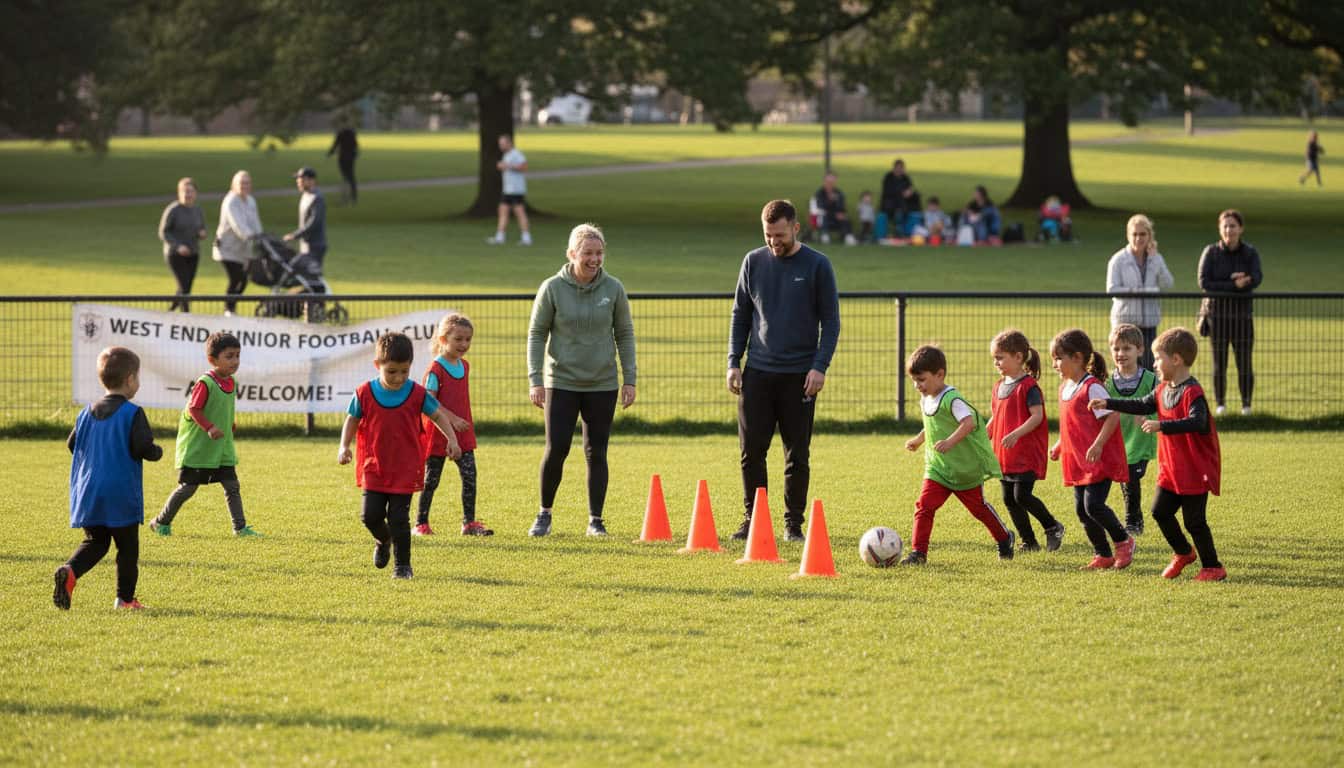
Grassroots football is football at its most accessible—community-based programs focused on participation, development, and enjoyment rather than elite performance. It's where most players have their first football experience.
Grassroots programs welcome players regardless of ability, prioritize participation over selection, serve local communities, run primarily through volunteers, and focus on fun and development.
Assessing Community Need
Questions to Answer
Before starting, understand your community:
- Is there demand? Are children asking for football opportunities? Are existing programs oversubscribed?
- What already exists? Map existing clubs and programs, identify gaps in age groups, locations, and times.
- What resources are available? Potential venues, volunteer base, funding sources.
Conducting Simple Research
Talk to local parents and families, visit existing programs, check local authority sports development contacts, and connect with your County FA for area information.
Planning Your Program
Define Your Mission
Clarify what you're trying to achieve. A simple mission statement might be: "We exist to provide accessible, enjoyable football for children in our community regardless of ability or background."
Start Small
Resist the urge to launch everything at once:
Phase 1: Foundation — One or two age groups, single weekly session, small coaching team, prove the concept.
Phase 2: Establishment — Add age groups gradually, introduce matches/festivals, build volunteer base, develop processes.
Phase 3: Growth — Full age group coverage, competitive and recreational pathways, strong community presence, sustainable operations.
Securing Facilities
Types of Venues
| Venue Type | Advantages | Considerations |
|---|---|---|
| Public parks | Free/low cost, accessible | Weather dependent, shared space |
| School fields | Available evenings/weekends | Booking required, relationships needed |
| Sports centers | All-weather options, facilities | Higher cost |
| 3G pitches | Reliable surface, bookable | Cost, may need to share |
Facility Essentials
Minimum requirements: safe, appropriate playing surface, toilet access, parking or public transport access. Ideal additions include storage for equipment and shelter for poor weather.
Recruiting Volunteer Coaches
Finding Your First Coaches
Look within: Parents of interested players, local football enthusiasts, former players in the community, students on sports courses.
Ask directly: Personal invitation works better than general appeals. Explain the specific commitment and highlight training and support available.
Supporting New Coaches
Essential training: FA Safeguarding (required), Emergency First Aid (required), FA Playmaker or Level 1 (recommended).
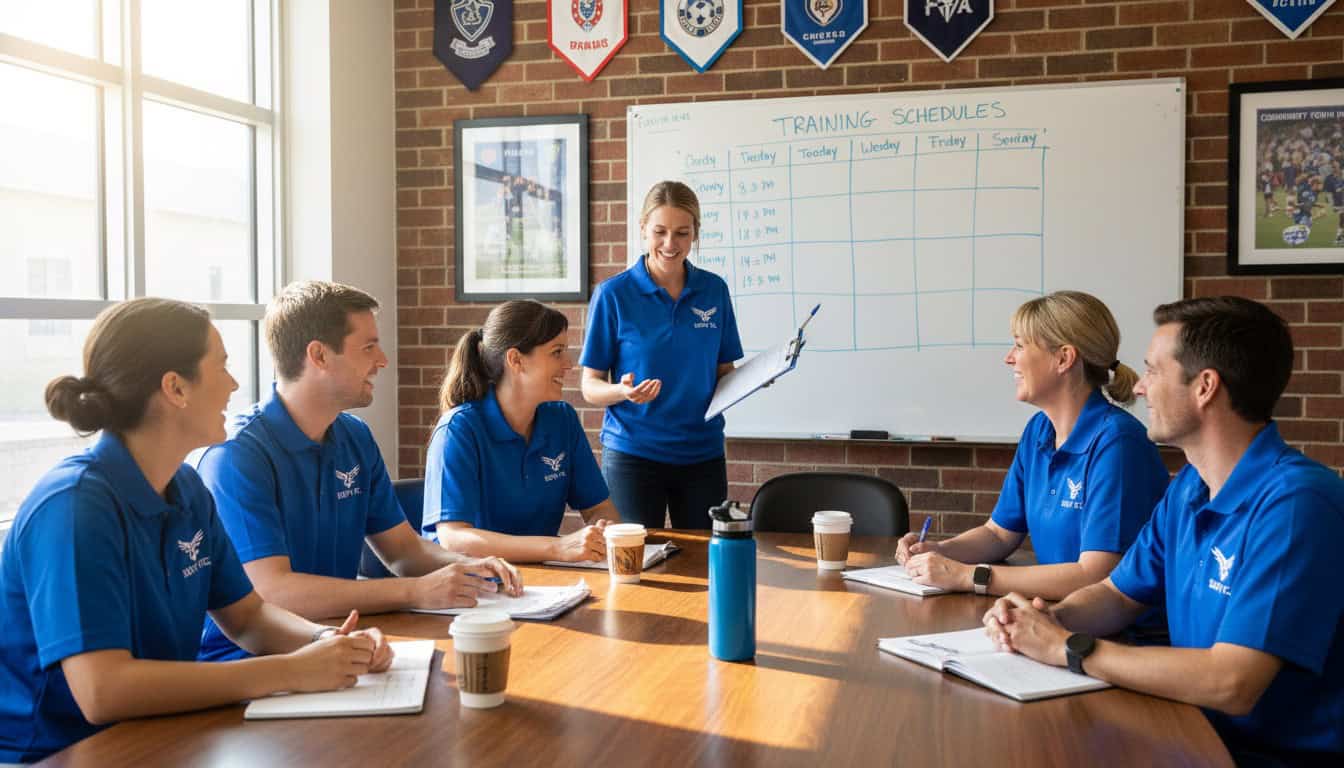
Ongoing support: Mentoring from experienced coaches, session plans and resources, regular check-ins, peer support network.
Establishing Structure
Registration and Membership
Create simple processes: registration form (player details, medical info, emergency contacts), consent forms, fee structure (if applicable), code of conduct for players and parents.
Session Structure
Example U8 session (60 minutes):
| Time | Activity |
|---|---|
| 0-10 min | Arrival, free play with balls |
| 10-20 min | Warm-up game |
| 20-35 min | Core activity (skills focus) |
| 35-55 min | Small-sided games |
| 55-60 min | Cool-down, recap |
Financial Sustainability
Revenue Sources
- Participant fees: Monthly or termly subscriptions, pay-per-session options—keep accessible
- Grants and funding: FA Football Foundation, Sport England, local authority grants, National Lottery
- Sponsorship: Local business kit sponsorship, equipment sponsors
- Fundraising: Events and socials, online fundraising, community initiatives
Keeping Costs Low
Use free or low-cost facilities where possible, share equipment between age groups, apply for grants before buying equipment, stay volunteer-led, and partner with schools for facility access.

Growing Your Program
When to Expand
Expand when you have stable foundation in current age groups, demand for additional provision, volunteers to support growth, financial capacity, and quality maintained at current level.
Adding Age Groups
Vertical expansion: Add adjacent age groups (if running U8, add U7 or U9) to allow players to progress within your program.
Horizontal expansion: Multiple teams at same age to accommodate more players.
Introducing Competition
Start with internal festivals (fun, low pressure), progress to friendly matches against other clubs, consider league entry when established, and maintain development focus alongside competition.
Community Integration
Building Relationships
With schools: Offer curriculum support, after-school clubs, assembly presentations, transition pathways from school to club.
With local organizations: Community centers, churches, youth organizations, local businesses.
With football community: County FA connections, other local clubs (cooperation, not just competition), regional football networks.
Measuring Success
| Metric | What It Indicates |
|---|---|
| Participant numbers | Reach and demand |
| Retention rates | Satisfaction and quality |
| Volunteer numbers | Sustainability |
| Diversity of participants | Accessibility |
| Financial health | Sustainability |
Beyond numbers: Children enjoying football, positive parent feedback, community recognition, volunteers feeling valued, players wanting to return.