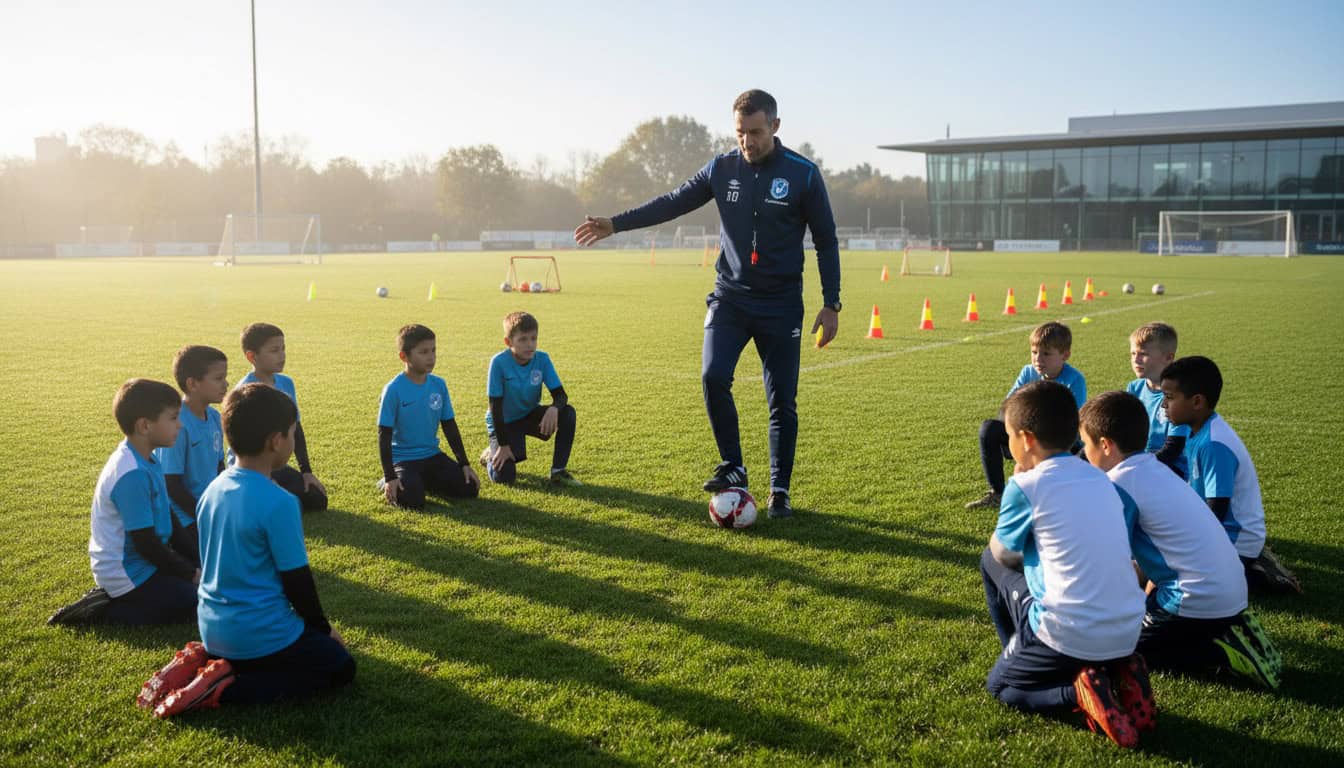
Build a youth football academy by establishing a clear development philosophy, creating age-appropriate programs from U6 through U18, recruiting qualified coaches, engaging parents as partners, and measuring success through player development rather than just match results.
Key Takeaways
- 1. Start with philosophy — Define what your academy values and how players will develop before building anything else
- 2. Structure by age — Create distinct programs for each developmental stage from foundation through performance
- 3. Invest in people — Quality coaches and engaged parents make the difference in successful academies
What This Guide Covers
Building a youth football academy—whether a single-team grassroots setup or a multi-age group program—requires thoughtful planning across many areas. This hub page connects you to detailed guides on every aspect of youth football development.
In this guide:
- Academy foundations and philosophy
- Age group structure and programming
- Coaching recruitment and development
- Parent and community engagement
- Measuring success beyond wins
The Foundation: Your Academy Philosophy
Before creating teams or recruiting players, define what your academy stands for.
Key Questions to Answer
Development approach:
- What kind of players do you want to develop?
- How will you balance winning with development?
- What playing style will you teach?
Values and culture:
- What behaviors do you expect from players, parents, and coaches?
- How will you handle discipline and standards?
- What makes your academy different?
Pathway vision:
- Where can players progress within your structure?
- What's the relationship between age groups?
- How do you connect to the wider football pathway?
Age Group Structure
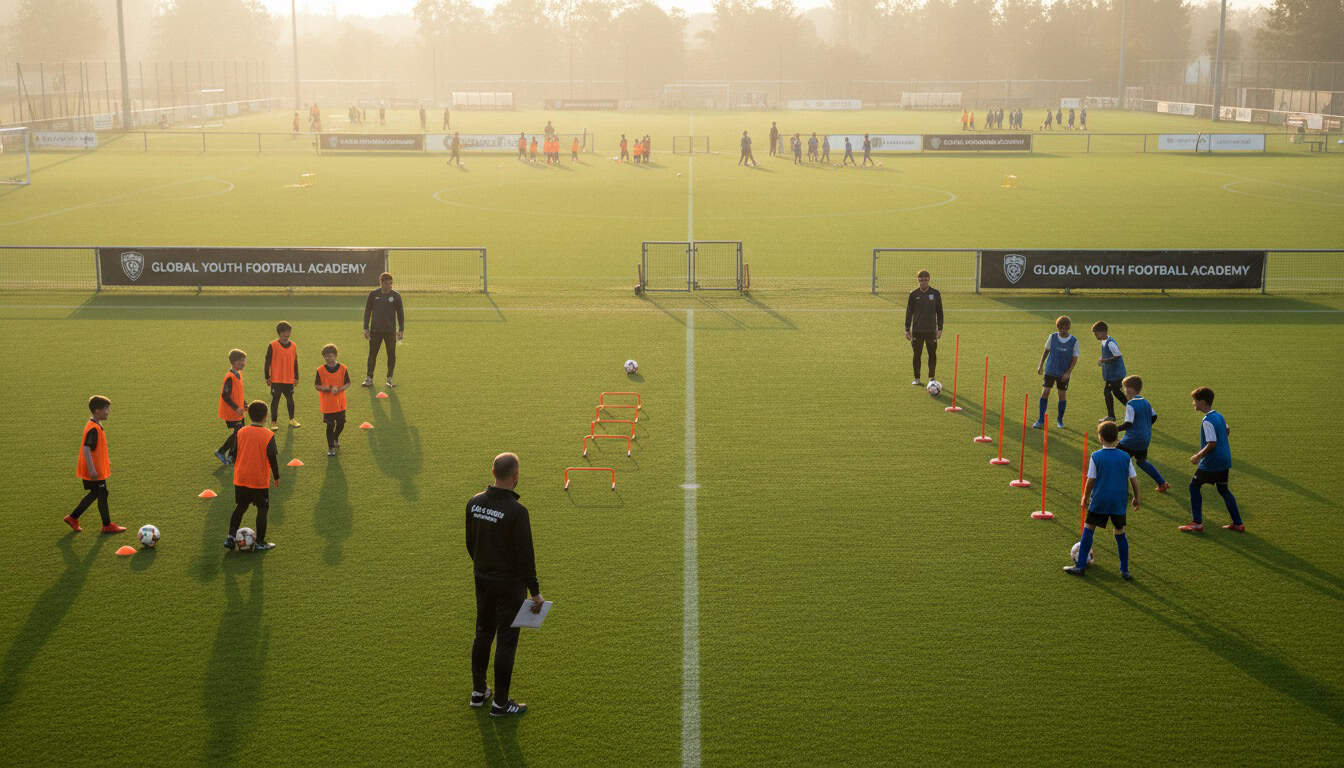
Youth football requires different approaches at different ages. Understanding developmental stages ensures appropriate programming.
The Development Journey
| Stage | Ages | Focus | Format |
|---|---|---|---|
| Foundation | U6-U8 | Fun, basic movement, ball familiarity | 4v4, 5v5 |
| Skill Development | U9-U11 | Technical skills, game understanding | 7v7, 9v9 |
| Game Understanding | U12-U14 | Tactical awareness, position-specific | 9v9, 11v11 |
| Performance | U15-U18 | Refining skills, physical development | 11v11 |
Each age group needs appropriate training session structure, suitable match formats and competition, age-specific coaching approach, and development priorities and benchmarks.
→ Detailed guide: Youth Age Groups Explained: U6 to U23
Ready to find matches?
Join verified teams finding friendly matches in minutes, not days.
Coaching: The Most Important Investment
Your coaches determine your academy's quality more than any other factor.
What Good Youth Coaches Need
Technical knowledge:
- Understanding of age-appropriate development
- Ability to teach skills progressively
- Session planning and delivery
People skills:
- Connecting with young players
- Communicating with parents
- Working within a coaching team
Character:
- Patience with development timelines
- Commitment to player-first approach
- Role modeling values and behavior
Building Your Coaching Team
| Role | Responsibility | Qualifications |
|---|---|---|
| Head of Academy | Overall vision, standards | FA Level 2+, management experience |
| Age Group Lead | Team coordination, parent liaison | FA Level 2 |
| Assistant Coach | Session support, individual attention | FA Level 1+ |
| Goalkeeper Coach | Specialist GK development | FA GK qualification |
→ Detailed guide: Hiring and Training Youth Coaches
Parent Partnership
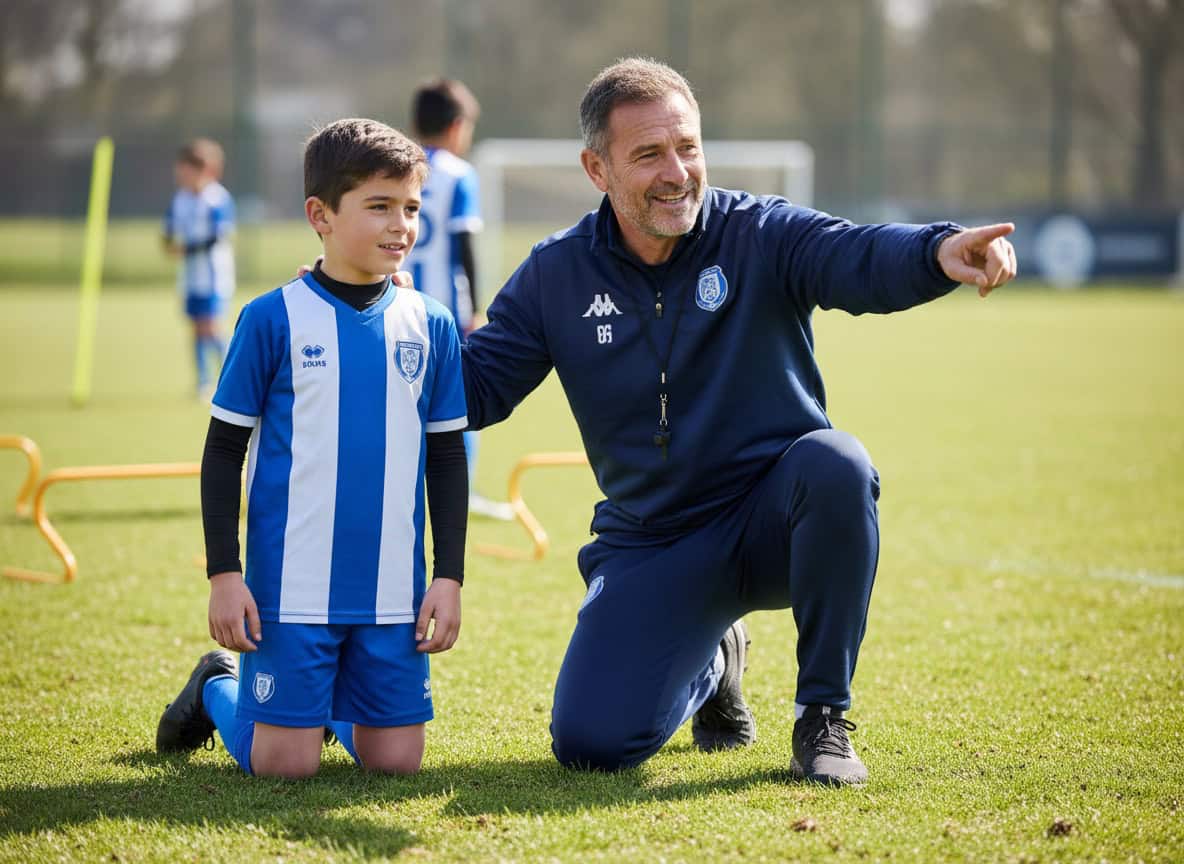
Parents can be your greatest asset or biggest challenge. Proactive engagement makes the difference.
Setting Expectations Early
From first registration, communicate:
- Your development philosophy
- What parents can expect
- What you expect from parents
- How communication works
- Sideline behavior standards
Ongoing Engagement
- Regular updates on development focus
- Parent education sessions
- Clear feedback mechanisms
- Involvement opportunities
→ Detailed guide: Parent Engagement in Youth Football
→ Related: Managing Parent Expectations in Youth Sports
Competition and Match Programming
How you approach matches shapes player development.
Balancing Competition and Development
Development-focused approach:
- Equal playing time at younger ages
- Position rotation to build all-round players
- Focus on performance process, not just results
- Use matches as learning opportunities
Competition considerations:
- Appropriate level of challenge
- Mix of winning and losing experiences
- Recovery from defeats, humility in victories
- Building resilience and character
→ Detailed guide: Youth Academy Match Scheduling
Finding Quality Opposition
Development requires appropriate opponents:
- Teams at similar developmental stage
- Mix of styles and challenges
- Reliable, well-organized opposition
- Positive match-day experiences
→ Related: How Youth Academies Find Quality Opposition
Measuring Success
Beyond Win-Loss Records
Development success looks different from competitive success:
| Traditional Metrics | Development Metrics |
|---|---|
| Wins and trophies | Skill improvement |
| League position | Player retention |
| Goals scored | Confidence growth |
| — | Players progressing to next level |
| — | Enjoyment and engagement |
→ Detailed guide: Measuring Youth Player Development
Safeguarding
Non-Negotiable Priority
Every academy must have robust safeguarding: DBS checks for all adults, safeguarding training requirements, clear reporting procedures, welfare officer in place, and safe environment protocols.
→ Essential guide: Safeguarding in Youth Sports
Getting Started: First Steps
If Starting from Scratch
- Define your philosophy and what you want to achieve
- Start small: One or two age groups
- Recruit the right coaches who share your values
- Establish parent expectations from day one
- Build quality over quantity
- Connect with your community and build relationships
If Developing an Existing Setup
- Assess current state honestly
- Clarify or refresh philosophy
- Identify gaps in structure, coaching, or programming
- Prioritize improvements based on impact
- Communicate changes to all stakeholders
- Implement progressively rather than all at once
Frequently Asked Questions
How many players do we need to start a youth academy?
You can start with a single team of 10-15 players in one age group. Quality matters more than quantity. Build a strong foundation before expanding.
What qualifications do youth coaches need?
At minimum, FA Safeguarding and Emergency First Aid. FA Level 1 coaching qualification is strongly recommended. As your academy grows, aim for FA Level 2 for lead coaches.
How do we fund a youth academy?
Common funding sources include player subscriptions, sponsorship, grants (FA, Sport England, local councils), fundraising events, and club subsidies. Keep costs accessible to avoid excluding families.
Should we focus on winning or development?
Development should be the priority, especially at younger ages. Winning becomes a more natural byproduct of good development as players mature. The best academies develop players who eventually win.
How do we handle players at different skill levels?
Create appropriate groupings within sessions, ensure all players get meaningful challenge, and consider recreational vs competitive pathways for players with different ambitions.
What's the biggest mistake new academies make?
Growing too fast before establishing quality. It's better to have two excellent teams than six mediocre ones. Build foundations before expanding.
How do we attract and keep good coaches?
Invest in their development, create a supportive coaching community, recognize their contribution, and ensure reasonable expectations. Good coaches stay where they're valued and developed.
When should we start streaming players by ability?
Generally not before U12, and even then carefully. Early streaming often reflects physical maturity rather than potential. Late developers need pathways too.
How do we measure if our academy is successful?
Track player development and improvement, retention rates, player and parent satisfaction, pathway progression, and coach development. Results matter less at younger ages.
What makes a youth academy sustainable long-term?
Strong volunteer base, engaged parent community, quality coaching pathway, clear philosophy that guides decisions, and financial stability through diverse funding.
Ready to find your next match?
Join verified teams finding opponents in minutes.
Create your free accountNo credit card required