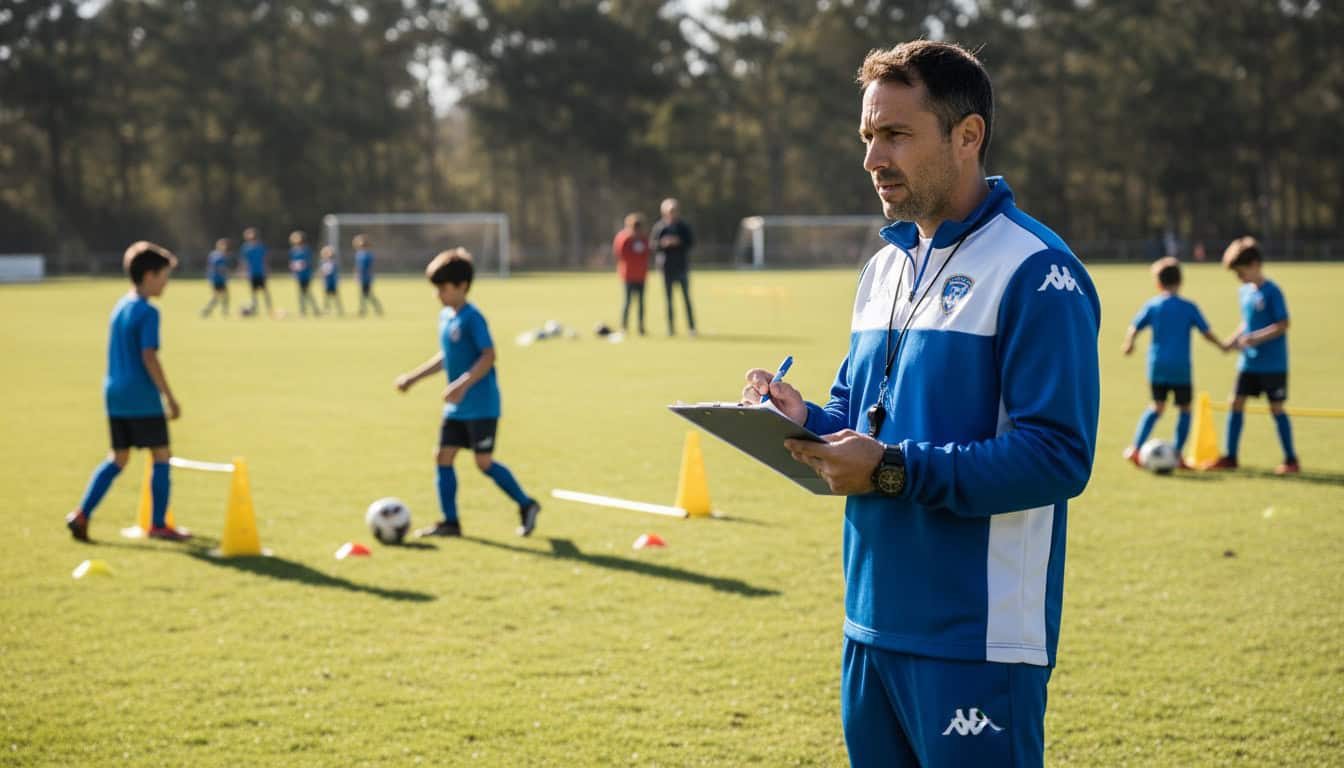
Measure youth player development by tracking individual skill progression, game understanding growth, attitude and effort indicators, and physical development—using observation, simple assessments, and player feedback rather than focusing solely on match results.
Key Takeaways
- Track individual progress: Each player's improvement matters more than team results
- Measure what matters: Skills, understanding, attitude, and enjoyment
- Use simple systems: Practical methods coaches can actually implement
Why Traditional Metrics Miss the Point
Win-loss records tell you almost nothing about youth development:
- Teams win because of physical maturity, not talent
- Strong age groups dominate regardless of development quality
- Winning can mask individual stagnation
- Losing can hide excellent player progress
Development-focused measurement answers: "Are players improving?" not "Are we winning?"
What to Measure
Technical Development
| Skill | What to Observe |
|---|---|
| First touch | Ball control quality, consistency |
| Passing | Accuracy, weight, range |
| Dribbling | Close control, ability to beat players |
| Shooting | Technique, composure, accuracy |
| Heading | Timing, direction (age-appropriate) |
| Weak foot | Improvement over time |
Game Understanding
| Aspect | What to Observe |
|---|---|
| Decision-making | Choosing right options, speed of thought |
| Positioning | Understanding of space, off-ball movement |
| Game reading | Anticipation, awareness |
| Communication | Talking, organizing |
Physical Development
| Attribute | Measurement |
|---|---|
| Speed | Timed runs, observation |
| Agility | Change of direction tests |
| Endurance | Sustained effort in matches/training |
| Strength | Appropriate to age, not weightlifting |
| Coordination | Movement quality |
Note on Physical Development
Physical development varies hugely by maturation—track trends, not absolutes.
Attitude and Character
| Quality | What to Observe |
|---|---|
| Effort | Consistent work rate |
| Coachability | Response to feedback |
| Resilience | Recovery from setbacks |
| Teamwork | Supporting others |
| Enjoyment | Enthusiasm, engagement |
Simple Measurement Methods
Observation-Based Tracking
Traffic light system (per attribute):
- 🟢 Green: Showing strength in this area
- 🟡 Amber: Developing, needs continued work
- 🔴 Red: Focus area for improvement
Review and update termly or quarterly.
Simple Rating Scales
1-5 scale per key attribute:
- Not yet showing this skill
- Beginning to develop
- Competent for age
- Strong for age
- Exceptional for age
Comparison Over Time
Same player, different times:
- Start of season vs end of season
- This year vs last year
- Before intervention vs after
Don't compare players to each other—compare to themselves.
Video Review
Record occasional clips of:
- Match play
- Training exercises
- Specific skill demonstrations
Review to see progress and identify development areas.
Tracking Systems
Individual Player Records
Simple template per player:
Player: [Name]
Age Group: [U10]
Season: [2025-26]
Technical Skills (1-5):
- First touch: [3] → [4]
- Passing: [3] → [3]
- Dribbling: [4] → [4]
- Shooting: [2] → [3]
Game Understanding (1-5):
- Decision-making: [2] → [3]
- Positioning: [3] → [3]
Attitude (traffic light):
- Effort: 🟢
- Coachability: 🟢
- Resilience: 🟡
Coach Notes:
[Key observations and development priorities]
Team Overview
Track squad-wide progress:
| Player | Technical | Tactical | Attitude | Overall Trend |
|---|---|---|---|---|
| Player A | ↑ | → | ↑ | Improving |
| Player B | → | ↑ | ↑ | Improving |
| Player C | ↓ | → | ↓ | Concern |
Meaningful Metrics
Better Than Results
| Instead of... | Track... |
|---|---|
| Goals scored | Shooting technique improvement |
| Matches won | Individual skill development |
| League position | Player retention rate |
| Trophies | Player enjoyment scores |
| Clean sheets | Defensive understanding growth |
Development-Focused Questions
Ask yourself:
- Are players better now than at the start of the season?
- Are they enjoying football and wanting to continue?
- Are they developing skills that will serve them long-term?
- Are we retaining players from season to season?
- Are players progressing through our pathway?
Gathering Feedback
Player Self-Assessment
For older players (U12+):
- "What have you improved at this season?"
- "What do you want to get better at?"
- "Are you enjoying your football?"
- "What would make training/matches better?"
Parent Feedback
Simple survey:
- "Is your child enjoying football?"
- "Do you see them improving?"
- "How would you rate communication from coaches?"
- "What could we do better?"
Coach Reflection
Regular self-assessment:
- "What development have I seen this term?"
- "Which players have improved most?"
- "Who needs more support?"
- "What should I focus on next?"
Using Measurement Data
Individual Development Plans
Use assessments to create focus areas:
Player X Development Focus (Term 2):
- Primary: Improve weaker foot passing
- Secondary: Increase defensive awareness
- Actions: Extra weak foot work in training, tactical discussions
Inform Training Design
Let data guide planning:
- Team-wide weakness? Address in sessions
- Individual needs? Create differentiated activities
- Skills plateauing? Try new approaches
Support Conversations
Use data in player/parent discussions:
- "Here's what I've seen improve..."
- "This is an area we're working on..."
- "Next term we're focusing on..."
How This Relates to Youth Development
Measuring development connects to your broader approach:
- Building a Youth Football Academy: Development measurement guides academy success
- Skill Level Assessment: Assessment informs pathway placement
- Age-Appropriate Training: Measure against developmental expectations
- Grassroots to Elite Pathway: Track progress through pathway stages