Quick Answer
Structure the pathway from grassroots to elite by creating clear stages with defined development priorities, appropriate competition levels, and transparent progression criteria—ensuring players can advance based on ability and commitment while maintaining opportunities at every level.
- ✓Define clear stages — From participation through to performance football
- ✓Set progression criteria — What players need to demonstrate to advance
- ✓Maintain multiple pathways — Not everyone aims for elite; all pathways have value
Understanding the Football Pathway
The journey from first touching a football to professional level follows a pathway with distinct stages. Most players won't reach the top—and that's fine. A well-structured pathway serves players at every level.
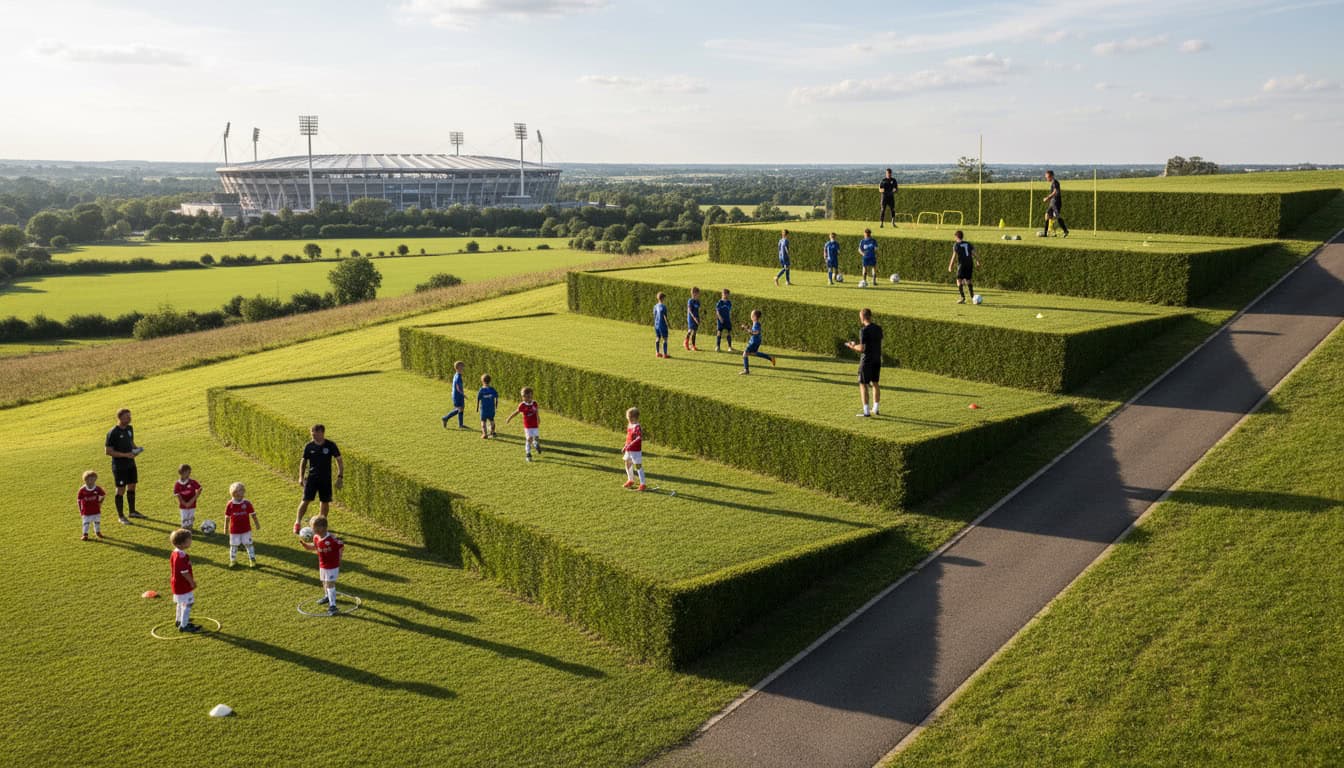
The Pyramid Structure
Each level has fewer players but higher demands. Players can exit the pathway at any stage into recreational football.
Pathway Stages Explained
Stage 1: Foundation (Ages 5-8)
Focus: Fun, basic movement, love of the ball
Environment includes small-sided formats (4v4, 5v5), maximum participation for all, minimal emphasis on results, and play-based learning.
What players develop: Basic coordination and movement, ball familiarity, social skills, enjoyment of football.
Progression indicator: Engagement and enthusiasm, not ability.
Stage 2: Participation (Ages 9-11)
Focus: Skill development, game understanding, continued enjoyment
Environment includes transitional formats (7v7, 9v9), equal playing time expected, introduction to competition, and skills-focused training.
What players develop: Technical fundamentals, basic game understanding, teamwork concepts, competitive instincts.
Progression indicator: Technical improvement, attitude, commitment.
Stage 3: Development (Ages 11-14)
Focus: Building complete players, identifying potential
Environment includes full format introduction (11v11), differentiated pathways emerge, more structured training, and meaningful competition.
What players develop: Refined technique, tactical understanding, position awareness, mental attributes.
Progression indicator: Consistent performance, potential indicators, dedication.

Stage 4: Performance (Ages 14-18)
Focus: Preparing for senior football, specialist development
Environment includes high-level competition, position-specific training, physical development programs, and mental performance support.
What players develop: Advanced tactical understanding, physical attributes, mental resilience, professional behaviors.
Progression indicator: Performance level, professional potential.
Stage 5: Elite/Academy
Focus: Professional pathway preparation
Environment includes professional club academies, full-time or intensive programs, high-level competition, and comprehensive support services.
Progression: Scholarship, professional contract, or transition out.
Creating Your Pathway Structure
For a Single Club
Even small clubs can create pathway thinking:
| Level | Description | Teams |
|---|---|---|
| First Team | Senior competitive | 1 |
| Reserves/Development | Senior development | 1 |
| Youth Performance | U16-U18 competitive | 1-2 |
| Youth Development | U12-U15 | 2-4 |
| Mini Soccer | U7-U11 | 3-6 |
Pathway Connections
Ensure pathways connect: U11s transition smoothly to U12, youth players have route to reserves, clear criteria for moving between levels, and support for those who don't progress.
Progression Criteria
What to Assess
| Attribute | Foundation | Participation | Development | Performance |
|---|---|---|---|---|
| Technical | Basic familiarity | Fundamental skills | Refined technique | Advanced execution |
| Tactical | N/A | Basic concepts | Position understanding | Game intelligence |
| Physical | Movement basics | Coordination | Athletic development | Physical performance |
| Mental | Enjoyment | Effort | Resilience | Professional mindset |
| Social | Interaction | Teamwork | Leadership potential | Role model behavior |
Transparent Communication
Players and families should understand what's needed to progress, how decisions are made, when reviews happen, and what support is available.
Avoiding Early Streaming
Before U12: Don't create "A team" and "B team" mentalities. Recognize physical maturity varies hugely. Late developers need pathways. Potential matters more than current level.
Multiple Exit Points
Healthy Pathways Have Options
Not progressing doesn't mean failure:
- Doesn't reach performance level → Continue at development level, enjoy football
- Leaves academy system → Return to grassroots, play recreationally
- Wants less commitment → Move to recreational program
- Develops other interests → Part-time involvement, social football
Supporting Transitions
When players don't progress: have honest, kind conversations, highlight what they've gained, identify appropriate next steps, and keep doors open for return.
Connecting to External Pathways
Professional Academy Links
How grassroots connects to professional: talent identification programs, trial opportunities, development center partnerships, communication with scouts.
Education Pathways
Football and education combined: college/university football, sports scholarships, coaching qualifications, alternative careers in football.