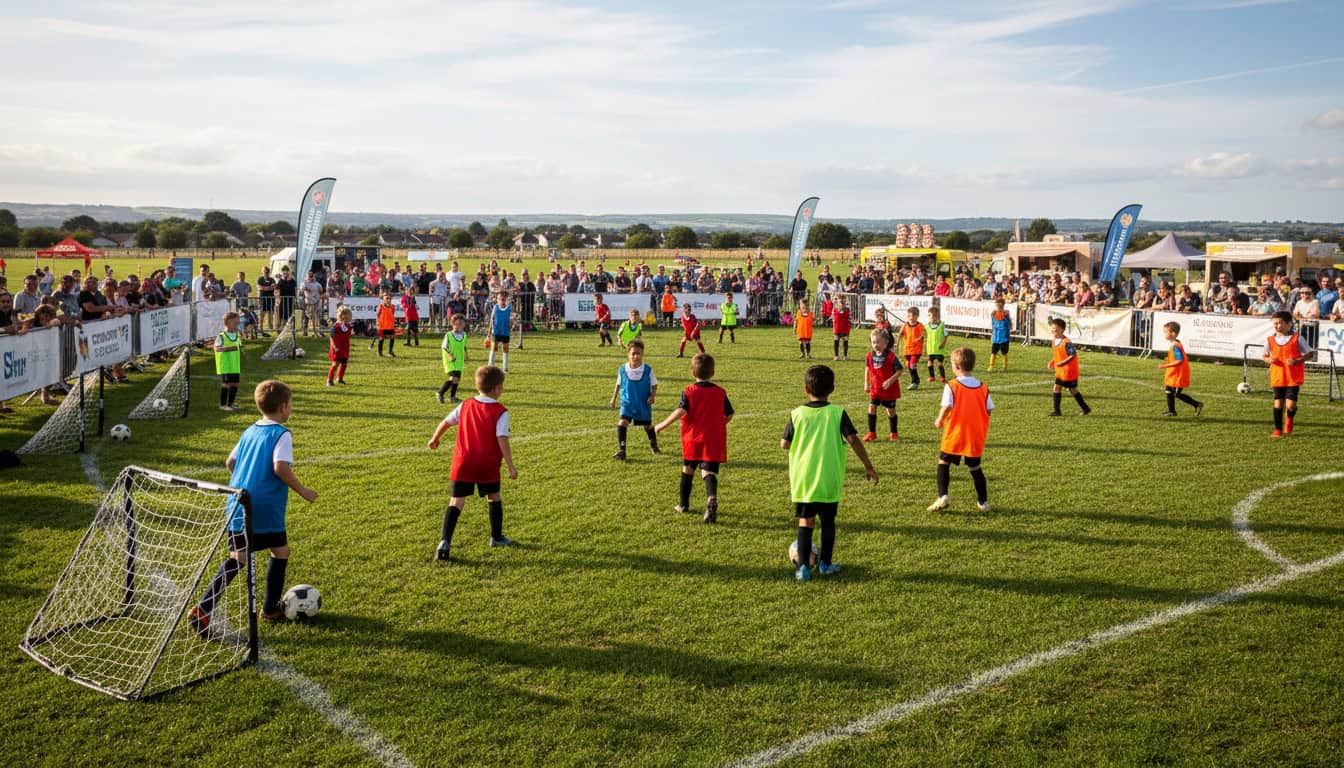
Organize youth football festivals by planning appropriate formats for the age group, inviting suitable teams, preparing comprehensive logistics, and focusing on participation and enjoyment rather than tournament-style competition—creating memorable experiences that celebrate youth football.
Key Takeaways
- Design for the age group: Format, duration, and intensity appropriate to development stage
- Focus on experience: Participation and enjoyment over trophies and winners
- Plan thoroughly: Logistics, safeguarding, and communication well in advance
What Is a Football Festival?
Football festivals differ from traditional tournaments:
| Traditional Tournament | Football Festival |
|---|---|
| Knockout/elimination | Everyone plays throughout |
| Focus on winning | Focus on participation |
| Single winner | No overall winner |
| High pressure | Fun and developmental |
| Results emphasized | Experience emphasized |
Festivals suit younger age groups and align with development-first philosophies.
Planning Your Festival
Initial Decisions
Age group(s):
- Single age group simplifies planning
- Multiple ages need more pitches and coordination
- Consider developmental appropriateness
Format:
| Age | Recommended Format | Pitch Size |
|---|---|---|
| U6-U7 | 4v4 | 30 x 20 yards |
| U8-U9 | 5v5 | 40 x 30 yards |
| U10-U11 | 7v7 | 60 x 40 yards |
Duration:
- Half-day events work well (3-4 hours)
- Short match times (8-10 minutes each way)
- Multiple games for all teams
Setting the Date
Consider:
- Avoid school holidays (complex) or term-time (difficult attendance)
- Weekend mornings ideal
- Check for fixture clashes
- Weather contingency (later in season for better weather, or book 3G backup)
Inviting Teams
How Many Teams
| Pitches Available | Teams to Invite | Games Per Team |
|---|---|---|
| 1 | 4-6 | 4-5 |
| 2 | 8-10 | 4-5 |
| 3 | 12-14 | 4-5 |
Finding Teams
- Your existing network of friendly opponents
- Platforms like Team Game Finder
- County FA contacts
- Local club coordinators
- Social media groups
Invitation Information
Include in your invitation:
- Date, time, venue
- Age group and format
- Number of games expected
- Cost (if any)
- Squad size recommendations
- Deadline for response
Festival Formats
Continuous Play Format
Teams rotate through playing and resting:
Round 1: A vs B, C vs D (E & F rest)
Round 2: A vs C, B vs E (D & F rest)
Round 3: B vs D, A vs F (C & E rest)
...continue rotation
No tables, no knockout—just lots of football.
Mini-League Format
Group teams and play round-robin within groups:
- Groups of 4-5 teams
- Play everyone in your group
- No inter-group playoffs
- Results recorded but not emphasized
Mixed Team Format (Younger Ages)
Players from different clubs mixed into teams:
- Excellent for U6-U8
- Builds new friendships
- Removes "my team vs your team" mentality
- Coaches referee and facilitate
Logistics Planning
Venue Requirements
Essential:
- Sufficient pitch space
- Goal equipment (mini goals or cones)
- Parking capacity
- Toilet facilities
- First aid access
- Shelter in case of rain
Ideal additions:
- Refreshments area
- Covered seating
- PA system
- Spectator zones marked
Equipment Checklist
| Item | Quantity |
|---|---|
| Goals (appropriate size) | 2 per pitch |
| Match balls | 3-4 per pitch |
| Cones for pitch marking | 20-30 per pitch |
| Bibs (multiple colors) | 20+ per pitch |
| First aid kit | 1 central, 1 per pitch |
| Timing device | 1 per pitch |
| Results sheets | Per pitch |
Staffing
| Role | Number Needed | Responsibility |
|---|---|---|
| Event coordinator | 1 | Overall management |
| Pitch coordinator | 1 per pitch | Running matches |
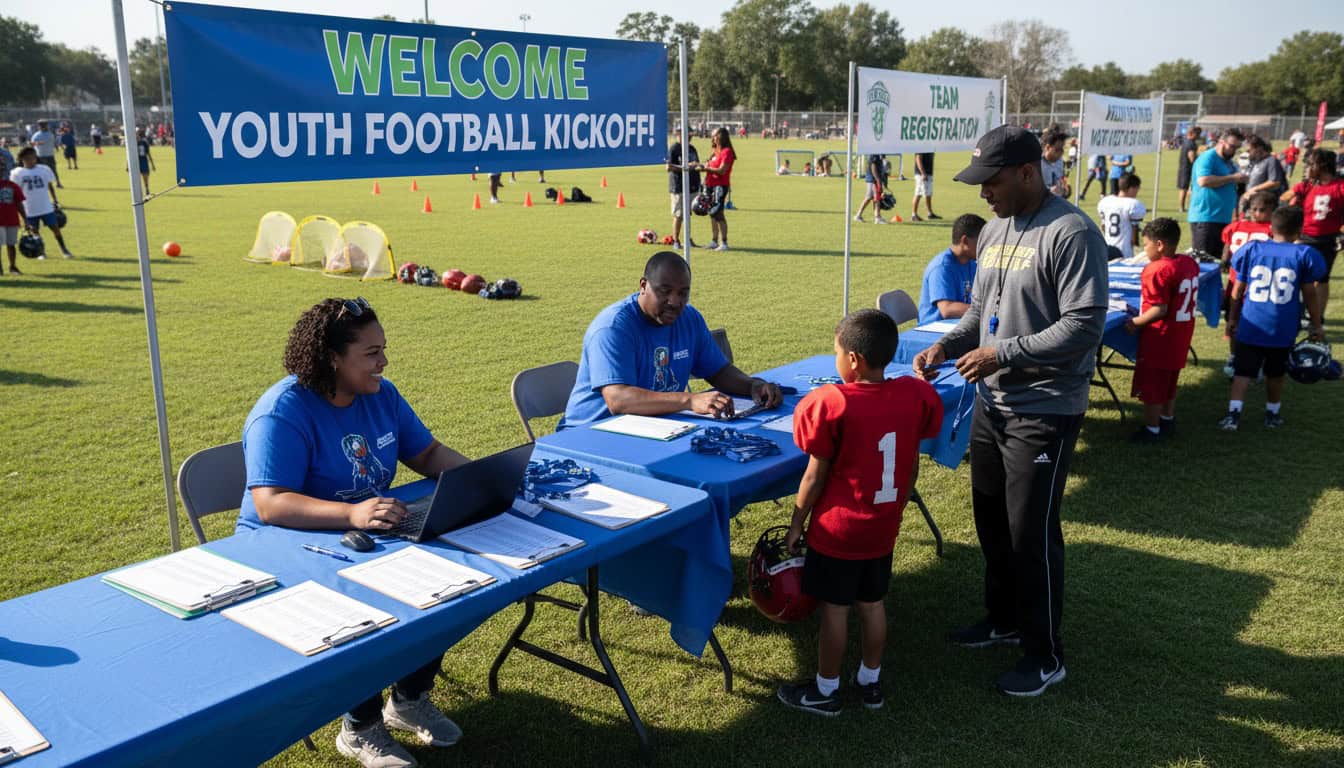
| Registration | 1-2 | Checking teams in |
| First aider | 1 minimum | Medical coverage |
| Refreshments | 2-3 | Food and drink |
| Parking marshal | 1-2 | Traffic management |
On the Day
Schedule Example (Half-Day Festival)
| Time | Activity |
|---|---|
| 8:30 | Organizers arrive, setup |
| 9:00 | Teams arrive, registration |
| 9:30 | Welcome, brief managers |
| 9:45 | Games begin |
| 10:45 | Refreshment break |
| 11:00 | Games resume |
| 12:00 | Final games |
| 12:15 | Presentation/celebration |
| 12:30 | Close |
Running Matches
Keep it flowing:
- Strict time management
- Quick turnarounds between games
- Clear signals for start/end
- Flexible with minor delays
Keep it fun:
- No formal referees needed (coaches oversee)
- Focus on participation
- Celebrate good play from all teams
- De-emphasize scores
Safeguarding Considerations
- All participating coaches DBS checked via their clubs
- Visible first aid point
- Lost child procedure in place
- Photography policy communicated
- Emergency procedures known to all staff
After the Festival
Recognition
Instead of "winners" trophies:
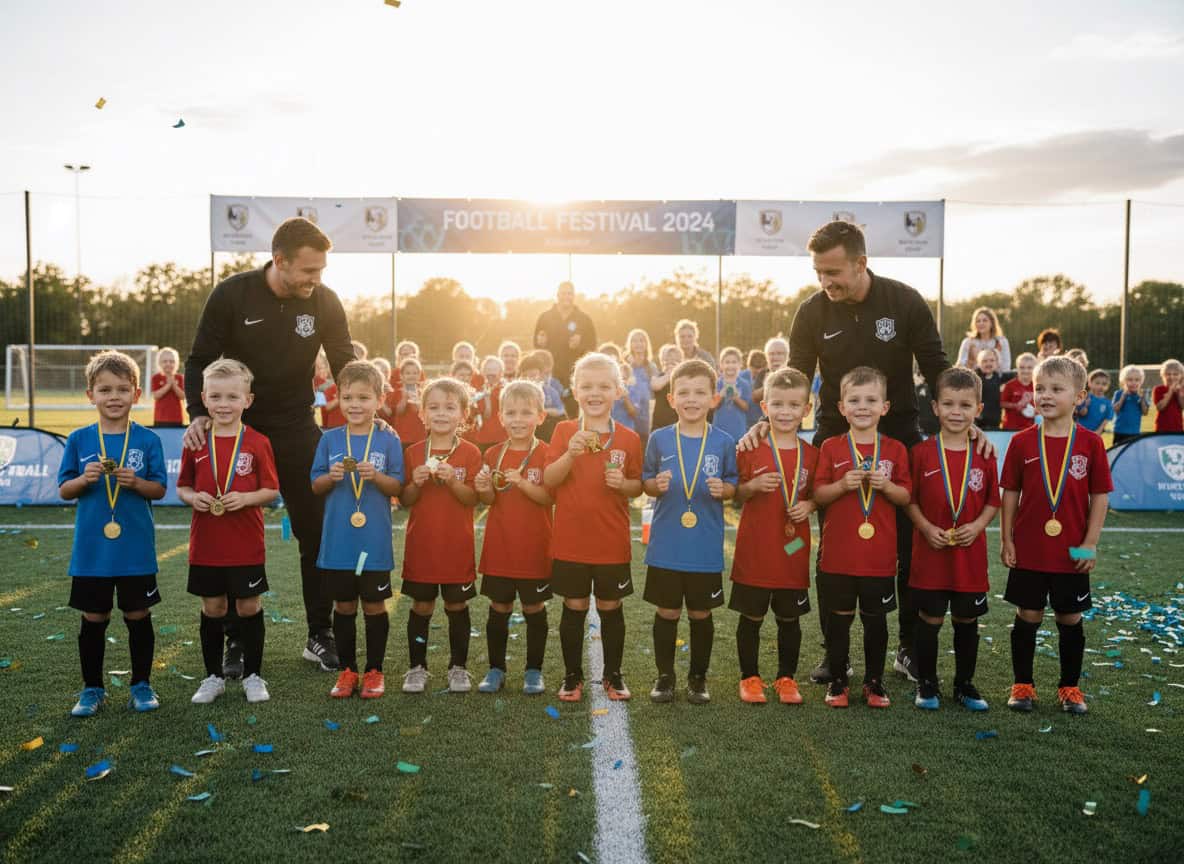
- Participation medals or certificates for all
- "Spirit of the Festival" recognition
- Team-by-team mentions of good moments
- Thank teams for attending
Feedback and Learning
Gather input:
- Quick survey to attending teams
- Debrief with organizing team
- Note what worked and what to improve
- Plan improvements for next time
Follow-Up
- Thank attending clubs
- Share photos (with consent)
- Announce next event
- Maintain relationships for future fixtures
How This Relates to Youth Development
Festivals connect to your broader approach:
- Building a Youth Football Academy: Festivals as part of match programming
- Youth Age Groups Explained: Format appropriate to developmental stage
- Finding Quality Opposition: Festivals as opponent networking
- Safeguarding in Youth Sports: Event safeguarding requirements