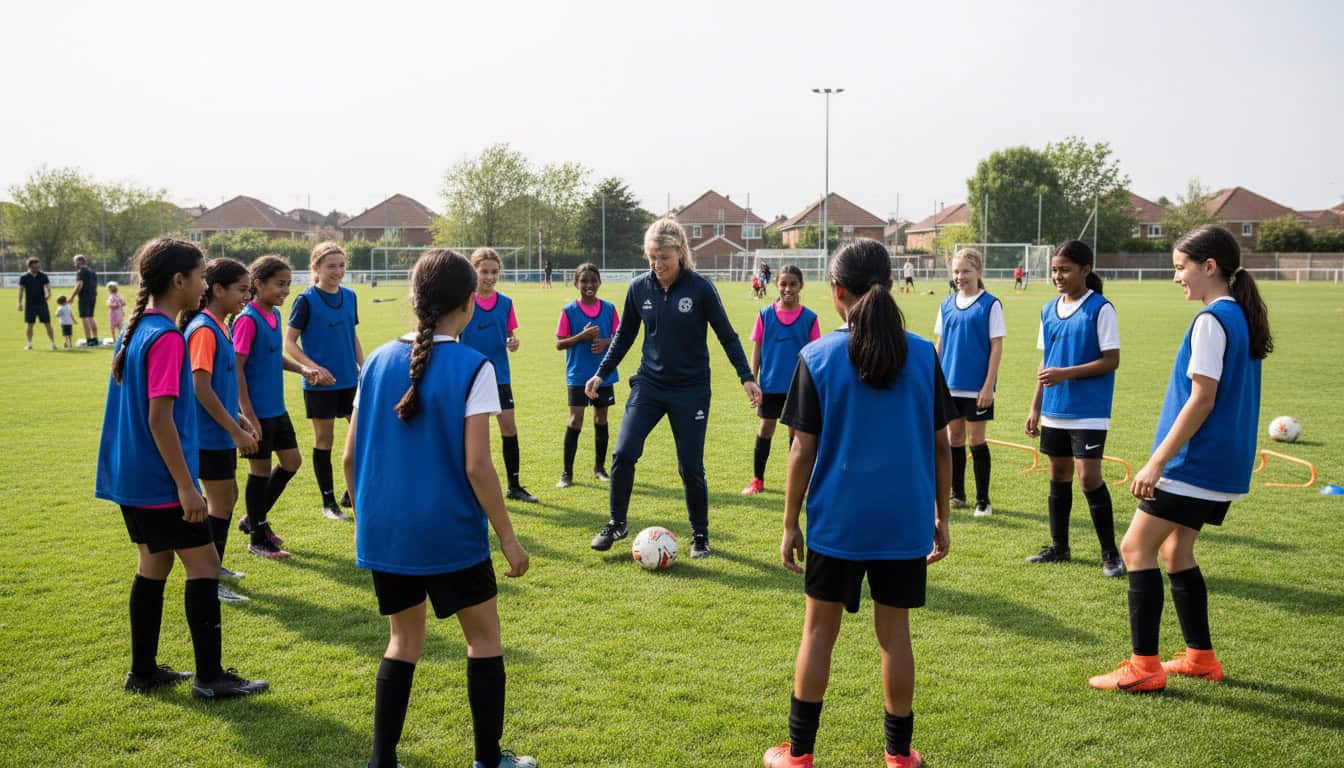
Build inclusive girls football programs by creating dedicated sessions with female coaches where possible, addressing practical barriers like changing facilities, and developing pathways that serve players from recreational participation through to performance levels.
Key Takeaways
- Create welcoming environments: Girls-only options alongside mixed opportunities
- Address practical barriers: Facilities, kit, and representation matter
- Build pathways: From first contact through to senior football
The Growth of Girls Football
Girls football is the fastest-growing segment of the game. More girls than ever want to play—your job is to provide opportunities that work for them.
Why girls football matters:
- Equal right to participate in sport
- Physical and mental health benefits
- Social connection and friendship
- Pathway to lifelong football involvement
- Growing competitive opportunities
Creating Girls-Only Programs
Why Girls-Only Options Matter
Benefits:
- Comfortable environment away from mixed-gender dynamics
- Role modeling from female coaches
- Tailored to girls' social and developmental needs
- Reduced dropout rates during adolescence
- Stronger friendships and team bonds
When mixed works:
- Younger ages (U6-U9) often mix well
- Where numbers don't allow girls-only
- When girls specifically choose mixed environment
Program Structure Options
| Model | Description | Best For |
|---|---|---|
| Girls-only teams | Dedicated girls squads at each age | Clubs with numbers |
| Girls sessions | Separate training, some mixed matches | Building numbers |
| Mixed with pathways | Mixed younger, girls-only options older | Developing programs |
| Regional partnerships | Combine with nearby clubs for girls teams | Smaller clubs |
Practical Considerations
Facilities
Changing rooms:
- Separate, private changing areas
- If not available, alternative arrangements (arrive changed)
- Toilet access essential
Playing surfaces:
- Same quality as boys' programs
- Appropriate pitch sizes
- Good goal equipment
Kit and Equipment
- Girls-specific sizing options
- Appropriate sportswear
- No different standards from boys' provision
- Consider cultural requirements (e.g., hijab-friendly options)
Timing
- Consider what works for girls and families
- May differ from boys' traditional slots
- School and social commitments matter
Coaching Girls Football
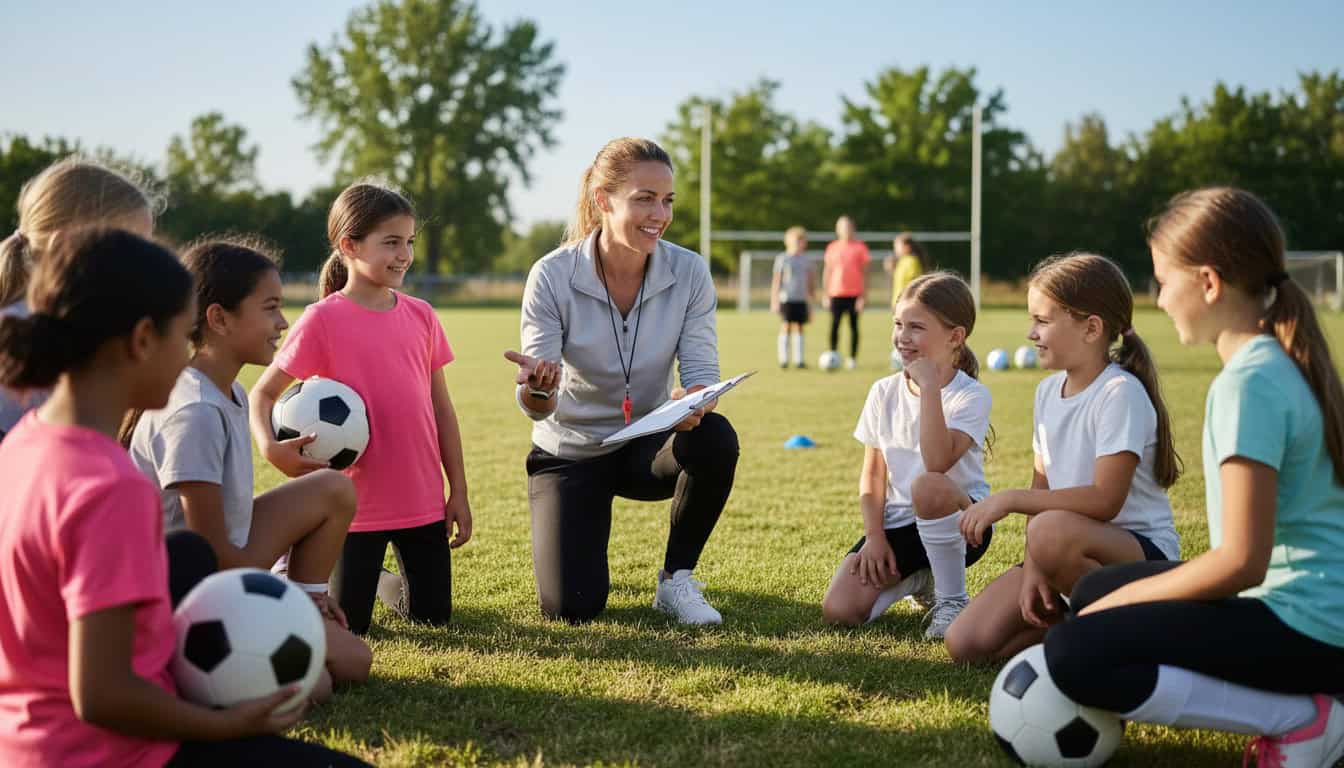
Female Coach Representation
Why it matters:
- Role modeling
- Understanding of girls' experiences
- Comfort for some players and parents
- Industry standard expectation
How to develop:
- Recruit female volunteers
- Support through coaching qualifications
- Create pathways from player to coach
- Offer flexible coaching opportunities
Coaching Approach
Same technical development as boys:
- Don't lower standards or expectations
- Develop technical skills fully
- Challenge appropriately
Different social dynamics:
- Relationships and friendships matter highly
- Group harmony affects performance
- Communication styles may differ
- Praise and feedback approach may vary
Understanding Dropout Patterns
Girls often leave football during adolescence due to:
- Social pressures
- Body image concerns
- Competing interests
- Lack of girls-only options
- Poor experiences
Counter with:
- Girls-only environments
- Positive body messaging
- Strong social aspects
- Female role models
- Flexible commitment options
Building Pathways
Entry Points
Create multiple ways in:
- Dedicated girls' taster sessions
- School partnerships (girls' after-school clubs)
- Girls-focused festivals and events
- Recreational and competitive options
- Wildcat Centres (FA initiative)
Age Group Progression
| Age | Focus | Format |
|---|---|---|
| U7-U8 | Fun, introduction | Mixed or girls, 5v5 |
| U9-U10 | Skill development | Girls-only preferred, 7v7 |
| U11-U12 | Transition | Girls 9v9, 11v11 |
| U13-U16 | Development | Girls 11v11 |
| U18+ | Senior transition | Women's football |
Connection to Women's Football
Create clear pathways to:
- Women's teams within your club
- County representative football
- Regional talent pathways
- College/university football
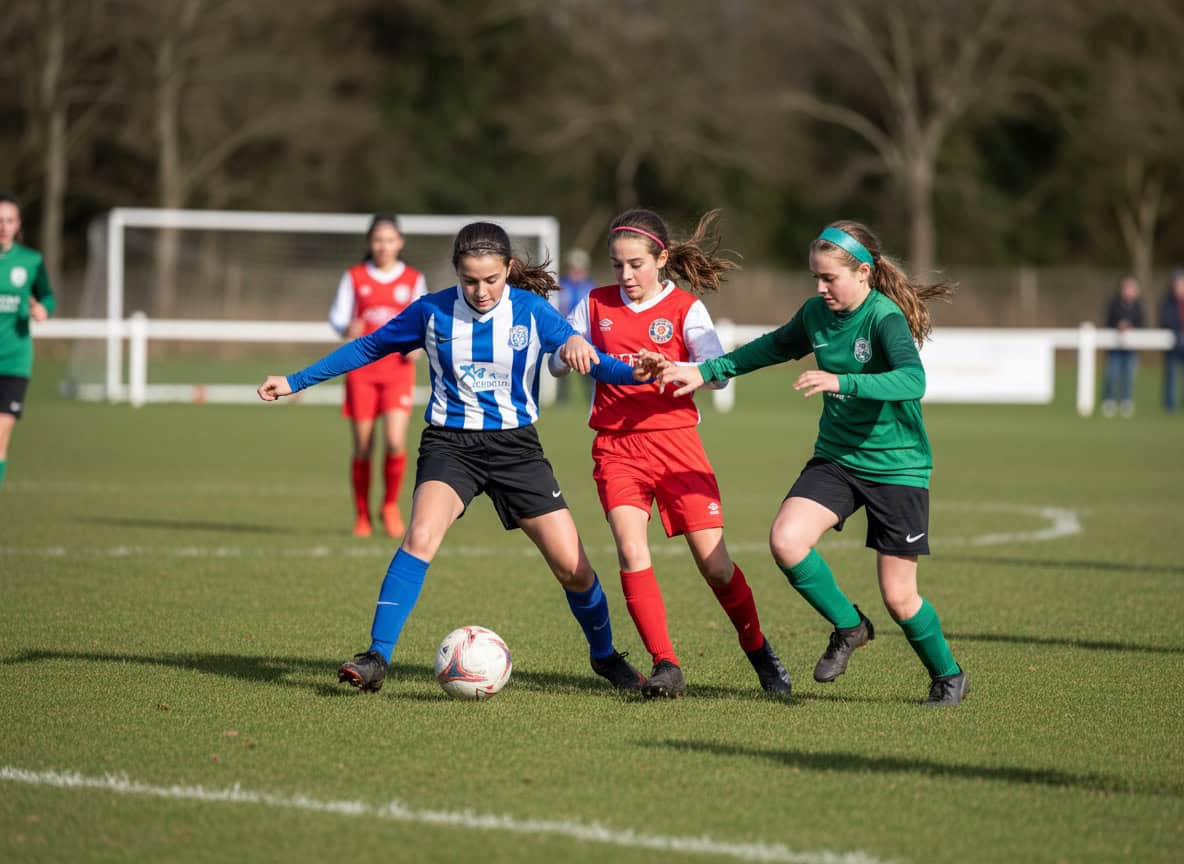
Finding Opponents and Competition
Challenges
- Fewer girls teams than boys at some ages
- Travel distances may be greater
- League structures vary by region
Solutions
- Use platforms like Team Game Finder filtered for girls' teams
- Connect with County FA for girls' league information
- Build relationships with other clubs' girls programs
- Host girls' festivals to bring teams together
- Consider regional travel for appropriate opposition
Competition Options
| Type | Description |
|---|---|
| Local leagues | Where numbers allow |
| County competitions | Cup and league structures |
| Festivals | Multi-team participation events |
| Friendlies | Arranged with other clubs |
| Representative | District, county, regional |
Marketing Girls Football
Reaching Girls and Families
Messaging:
- "Football is for everyone"
- Feature female players in imagery
- Highlight fun, friendship, and fitness
- Showcase female coaches and role models
Channels:
- School partnerships and assemblies
- Social media targeting
- Community events and festivals
- Word of mouth from existing players
Reducing Barriers
- Offer taster sessions (free or low cost)
- Provide kit for those who need it
- Financial support for families in need
- Flexible commitment options
- Welcoming environment for complete beginners
How This Relates to Youth Development
Girls football connects to your broader approach:
- Building a Youth Football Academy: Girls programs as part of academy
- Building a Grassroots Program: Girls as key participation segment
- Youth Age Groups Explained: Same developmental principles apply
- Hiring and Training Youth Coaches: Developing female coaches