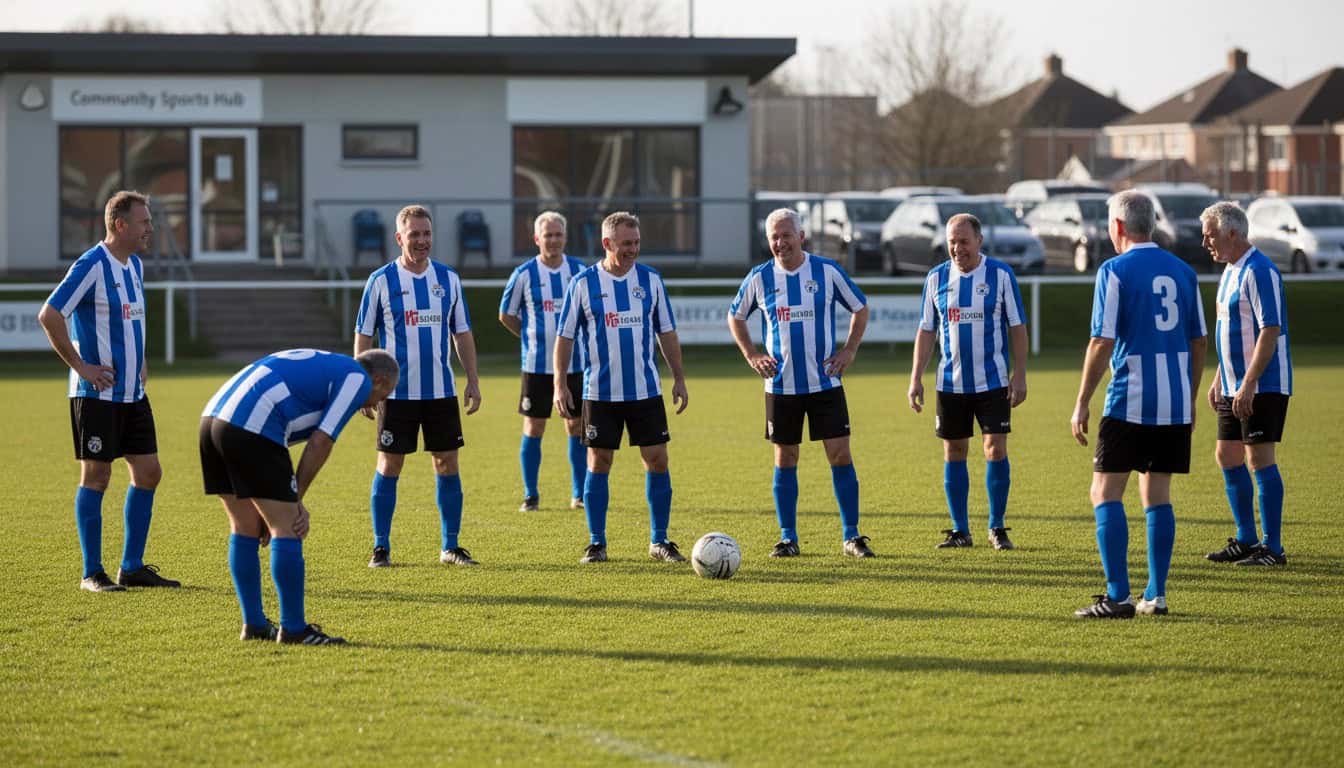
Veterans football serves players aged 35 and over through modified formats with shorter match durations, rolling substitutions, and reduced physical intensity—focusing on continued participation, fitness, and social connection for players who want to keep playing beyond traditional adult football.
Key Takeaways
- Modified formats: Shorter matches, rolling subs, adjusted rules
- Health and fitness focus: Playing safely at appropriate intensity
- Strong social element: Camaraderie and connection often as important as competition
What Is Veterans Football?
Veterans football provides opportunities for players typically aged 35 and over to continue playing. As bodies age and recovery slows, modified formats allow continued participation.
| Category | Typical Age | Common Format |
|---|---|---|
| Veterans | 35+ | 11v11, modified |
| Super Veterans | 45+ | 11v11 or small-sided |
| Walking Football | Any age (often 50+) | No running allowed |
Why Veterans Football Matters
For Players
- Continue playing: Don't have to stop when open-age becomes too demanding
- Fitness maintenance: Regular physical activity with purpose
- Social connection: Friendships and team belonging
- Mental health: Exercise and community benefits
- Competition: Still want to compete, just appropriately
For Clubs
- Player retention: Keep older players involved
- Volunteer development: Veterans often become coaches and officials
- Community strength: Multi-generational club culture
- Revenue: Additional membership and activity
Format Modifications
Common Adjustments
| Standard Adult | Veterans Modification |
|---|---|
| 2 x 45 mins | 2 x 35-40 mins |
| 3-5 subs | Rolling subs unlimited |
| No re-entry | Players can return after being subbed |
| Standard physicality | Reduced contact expectations |
| — | Often no slide tackles |
Walking Football
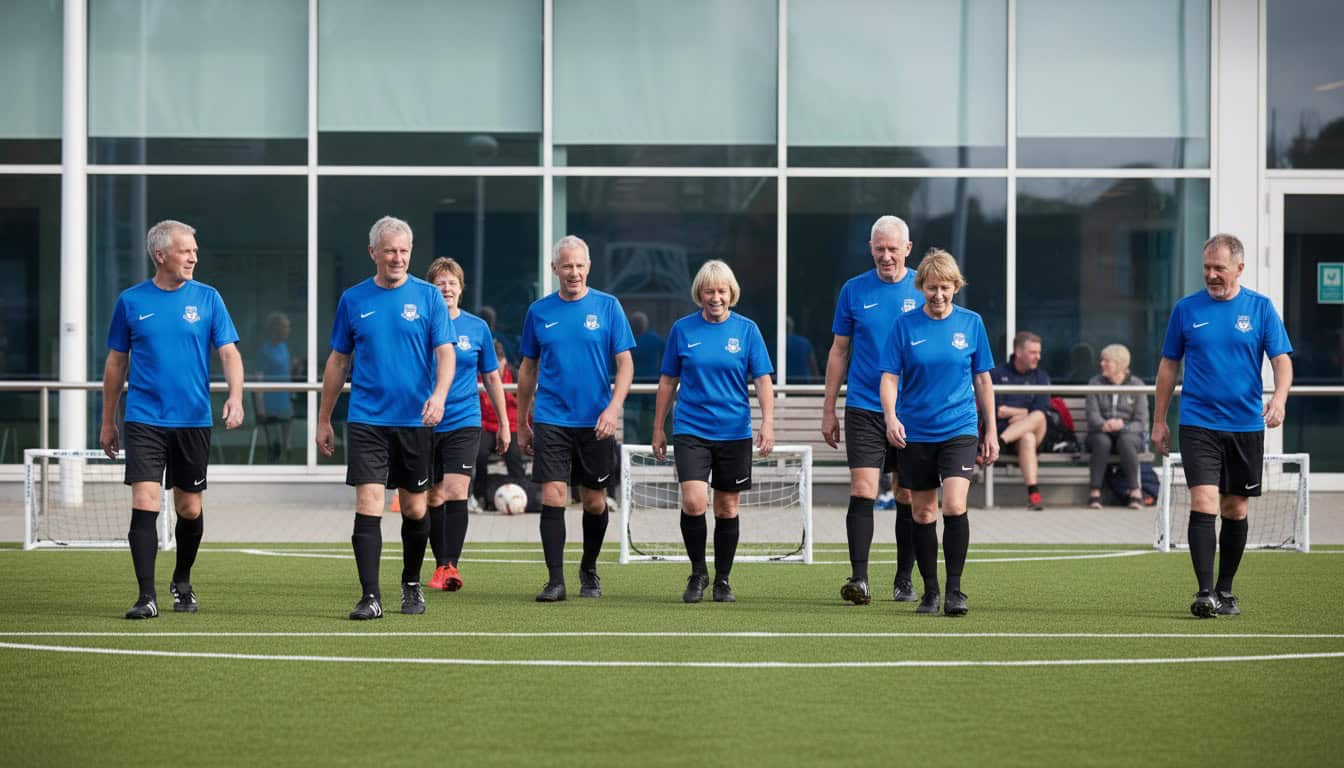
Key rules:
- No running (indirect free kick for running)
- No contact
- Ball must stay below head height
- Smaller pitches and goals
- Often 6v6 or 5v5
Walking football has opened football to players who would otherwise stop entirely.
Setting Up a Veterans Section
Getting Started
Assess demand:
- Survey existing adult players approaching 35
- Gauge interest from former players
- Check local competition options
Start simply:
- Weekly training session
- Social games initially
- Build numbers before formal competition
Building the Squad
Where to find players:
- Current adult players ageing out of open-age
- Former players wanting to return
- Players from other sports seeking lower impact
- New to football at older age (yes, it happens)
What players want:
- Appropriate physical demands
- Flexible commitment
- Social environment
- Competitive opportunity
- Injury prevention focus
League and Competition Options
- FA Veterans Cups: National and county competitions
- Local veterans leagues: Check your County FA
- Friendly matches: Arrange with other veterans teams
- Tournaments: Veterans-specific events
Managing Veterans Football
Player Welfare
Injury prevention:
- Proper warm-up and cool-down
- Appropriate intensity management
- Recovery time respected
- Flexibility and mobility work
Health considerations:
- Players may have underlying conditions
- Emergency action plan in place
- Encourage medical checks
- Listen to players about their limits
Social Element
Often the most important factor:
- Post-match socializing
- Regular social events
- Inclusive atmosphere
- Welcoming to newcomers
- Flexible about commitment
Training Approach
Adjust expectations:
- Shorter, lower intensity sessions
- More recovery between efforts
- Skills focus over fitness
- Enjoyable activities
Sample session:
| Time | Activity |
|---|---|
| 0-15 min | Extended warm-up, mobility |
| 15-35 min | Skills and passing work |
| 35-55 min | Small-sided games |
| 55-60 min | Cool-down and stretch |
Finding Opponents
Challenges
- Fewer veterans teams than open-age
- Geographic spread
- Matching intensity expectations
Solutions
- Use Team Game Finder filtered for veterans
- County FA veterans coordinators
- Veterans football social media groups
- Direct contact with local clubs
- Regional leagues and cups
Pre-Match Agreements
Discuss before playing:
- Expected intensity level
- Rolling substitutions confirmation
- Any specific rules (no slide tackles, etc.)
- Social plans post-match
Walking Football
Growing Rapidly
Walking football has transformed football for older players:
- Accessible for those who can't run
- Lower injury risk
- Genuine exercise and skill development
- Strong social community
Finding Walking Football
- FA Accredited sessions across the UK
- Local leisure centers
- Age UK partnerships
- Club-run sessions
Starting Walking Football at Your Club
- Venue: Indoor or small 3G area works well
- Equipment: Smaller goals, size 4 balls common
- Participants: Market to 50+ but open to anyone
- Frequency: Weekly works for most groups
How This Relates to Your Club
Veterans football connects to your broader club approach:
- Building a Youth Football Academy: Veterans as coaches and mentors
- Volunteer Sports Club Management: Veterans programs as part of club offering
- Finding Opponents: Veterans-specific opponent search
- Recruit and Retain Volunteers: Veterans often volunteer