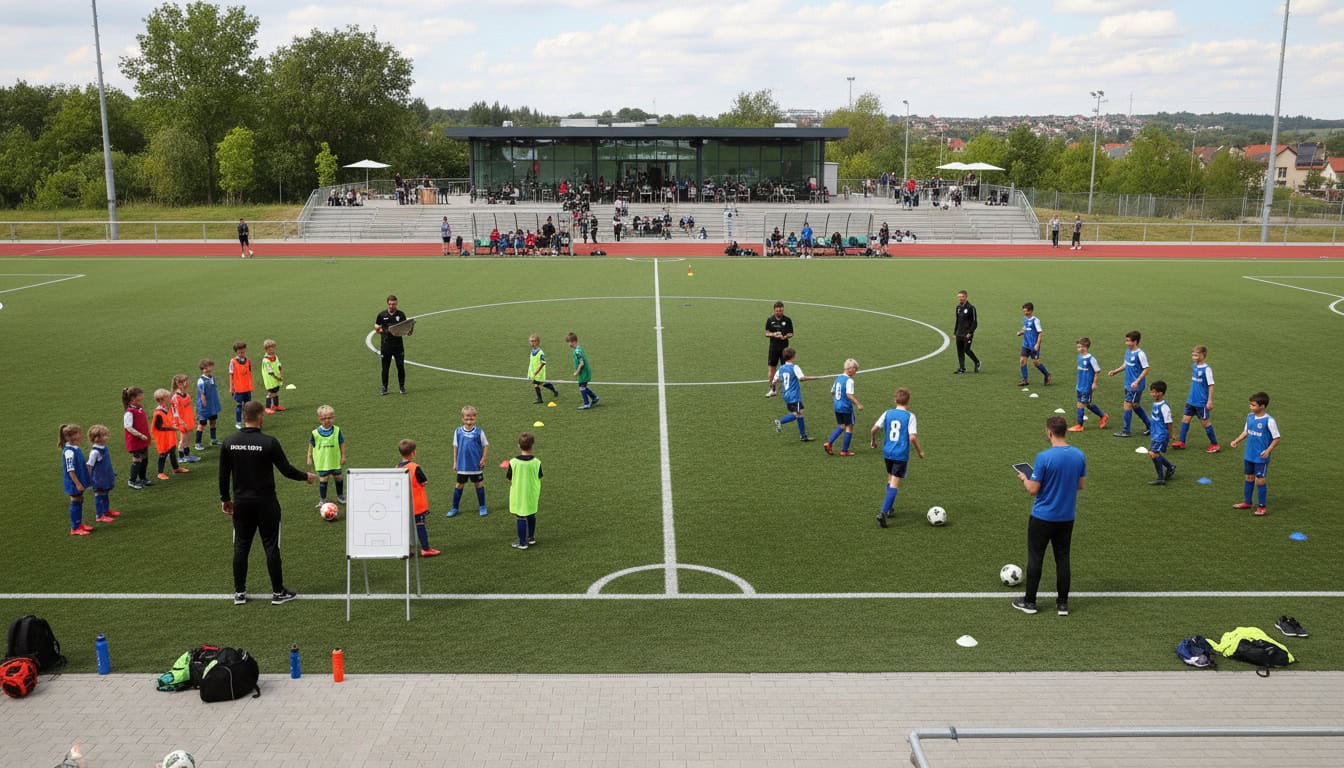
Organize matches for different age groups by following FA-recommended formats for pitch size, ball size, match duration, and player numbers. Adjust your opponent search, communication style, and match-day logistics to suit each age group's specific developmental needs.
Why Age-Appropriate Match Organization Matters
A well-organized friendly match for U8s looks completely different from one for U16s or adult veterans. Getting the format right ensures players develop skills, enjoy their football, and stay safe.
Benefits of Age-Appropriate Organization
This guide covers organizing friendly matches across all age groups, from mini soccer through to veterans football.
FA Recommended Formats by Age Group
Youth Football Formats (England)
| Age Group | Players | Pitch Size | Goal Size | Ball | Duration |
|---|---|---|---|---|---|
| U7-U8 | 5v5 | 40 x 30 yards | 12' x 4' | Size 3 | 4 x 10 mins |
| U9-U10 | 7v7 | 60 x 40 yards | 12' x 6' | Size 4 | 2 x 25 mins |
| U11-U12 | 9v9 | 80 x 50 yards | 16' x 7' | Size 4 | 2 x 30 mins |
| U13-U14 | 11v11 | 100 x 60 yards | 21' x 7' | Size 5 | 2 x 35 mins |
| U15-U16 | 11v11 | Full size | Full size | Size 5 | 2 x 40 mins |
| U17-U18 | 11v11 | Full size | Full size | Size 5 | 2 x 45 mins |
Formats may vary by region and competition. Always confirm with your local County FA.
Adult and Veterans Formats
| Category | Typical Format | Common Modifications |
|---|---|---|
| Open Age Adult | 11v11, 2 x 45 mins | Standard rules |
| Veterans (35+) | 11v11, 2 x 40 mins | Rolling subs common |
| Walking Football | 6v6 or 5v5 | No running, no heading |
| Small-sided Adult | 5v5, 6v6, 7v7 | Shorter matches, varies |
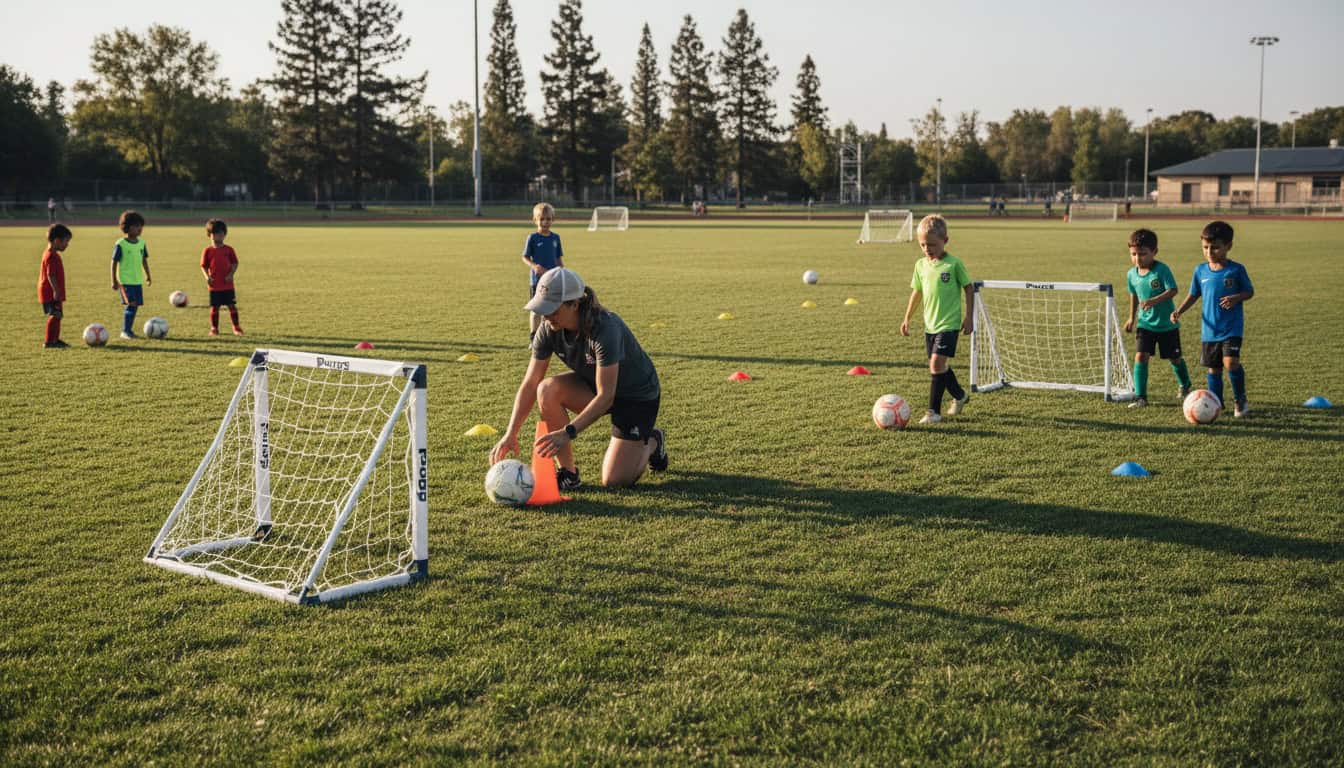
Organizing Mini Soccer Friendlies (U7-U8)
Key Considerations
Format focus: Fun, involvement, and basic skill development. Every child should touch the ball frequently.
Match structure:
- Four quarters of 10 minutes
- Breaks between quarters for coaching points and hydration
- Equal playing time for all players
- No league tables or formal results focus
Finding opponents:
- Look for teams with similar player numbers
- Skill level matching less critical — focus on participation
- Local clubs preferred (minimize travel for young children)
Communication:
- Always communicate through parents/guardians
- Provide clear venue details with parking information
- Allow extra arrival time for families
Mini Soccer Specific Rules
- Retreat line: When goalkeeper has the ball, opposition retreats to halfway
- No heading: Indirect free kick if deliberate heading occurs
- Referee: Often one parent/coach from each team assists
- Focus: Praise effort and enjoyment over results
Organizing 7v7 Friendlies (U9-U10)
Key Considerations
Format focus: Developing individual technique, introducing team concepts, maintaining enjoyment.
Match structure:
- Two halves of 25 minutes
- 5-10 minute half-time
- Rolling substitutions encouraged
- All players should play at least half the match
Finding opponents:
- Skill level becomes more relevant at this stage
- Look for teams with similar development approaches
- Consider mixing development matches with more competitive ones
Development Priorities at U9-U10
- Players should experience multiple positions
- Goalkeepers should rotate (unless specialist and willing)
- Encourage creative play over results-focused tactics
- Use friendlies to try things that might fail in competitive matches
Organizing 9v9 Friendlies (U11-U12)
Key Considerations
Format focus: Transitional format — still development-focused but introducing more tactical elements.
Finding opponents:
- Skill level matching becomes important
- Consider academic year placement (September birthday vs August)
- Physical development varies significantly at this age
This age group bridges mini soccer and full-format football. Friendlies should help players understand positional responsibilities, develop spatial awareness on larger pitch, build fitness for longer match durations, and experience tactical variety.
Organizing 11v11 Youth Friendlies (U13-U18)
Key Considerations
Format focus: Full football with age-appropriate duration. Balance competition with development.
| Age | Duration | Half-time | Common Approach |
|---|---|---|---|
| U13-U14 | 2 x 35 mins | 10 mins | Development priority |
| U15-U16 | 2 x 40 mins | 10-15 mins | Mixed development/competition |
| U17-U18 | 2 x 45 mins | 15 mins | Competition simulation |
Finding opponents:
- Skill level and physical development matching critical
- Academy vs grassroots can create mismatches
- Consider playing style compatibility (development vs direct play)
Academy and Development Considerations
For teams with performance pathways:
- Use friendlies to give squad players meaningful minutes
- Test tactical variations without league consequences
- Provide match experience for players returning from injury
- Develop goalkeeper rotation plans
Ready to find matches?
Join verified teams finding friendly matches in minutes, not days.
Organizing Adult Friendlies (Open Age)
Format focus: Match simulation, squad development, social cohesion, fitness maintenance.
| Scenario | Recommended Format |
|---|---|
| Preseason fitness | 2 x 35-40 mins, or three periods of 30 mins |
| Match simulation | 2 x 45 mins, competition rules |
| Squad rotation | 2 x 40 mins, unlimited rolling subs |
| Late season | Shortened formats, manage workload |
Organizing Veterans Friendlies (35+, 45+, Walking Football)
Format focus: Enjoyment, fitness, social connection, injury prevention.
Common modifications:
- Shorter match durations (2 x 35 mins typical)
- Rolling substitutions standard
- Reduced intensity expectations
- Walking football: no running permitted
Walking Football Specifics
- No running — indirect free kick for running
- No contact or slide tackles
- Ball must stay below head height
- Often played on smaller 3G pitches
- Mixed gender games common
Cross-Age Group Fixtures
Sometimes teams at different age groups play each other:
When It Works
- Playing up: Strong U14 team vs average U15 team
- Development opportunity: Give younger players experience against older opponents
- Numbers shortage: Combine U17 and U18 squads for sufficient players
Guidelines
- Ensure physical safety (avoid significant size mismatches)
- Communicate clearly with all parents involved
- Modify rules if needed (smaller goals, shorter duration)
- Focus on development rather than result
Multi-Age Group Events
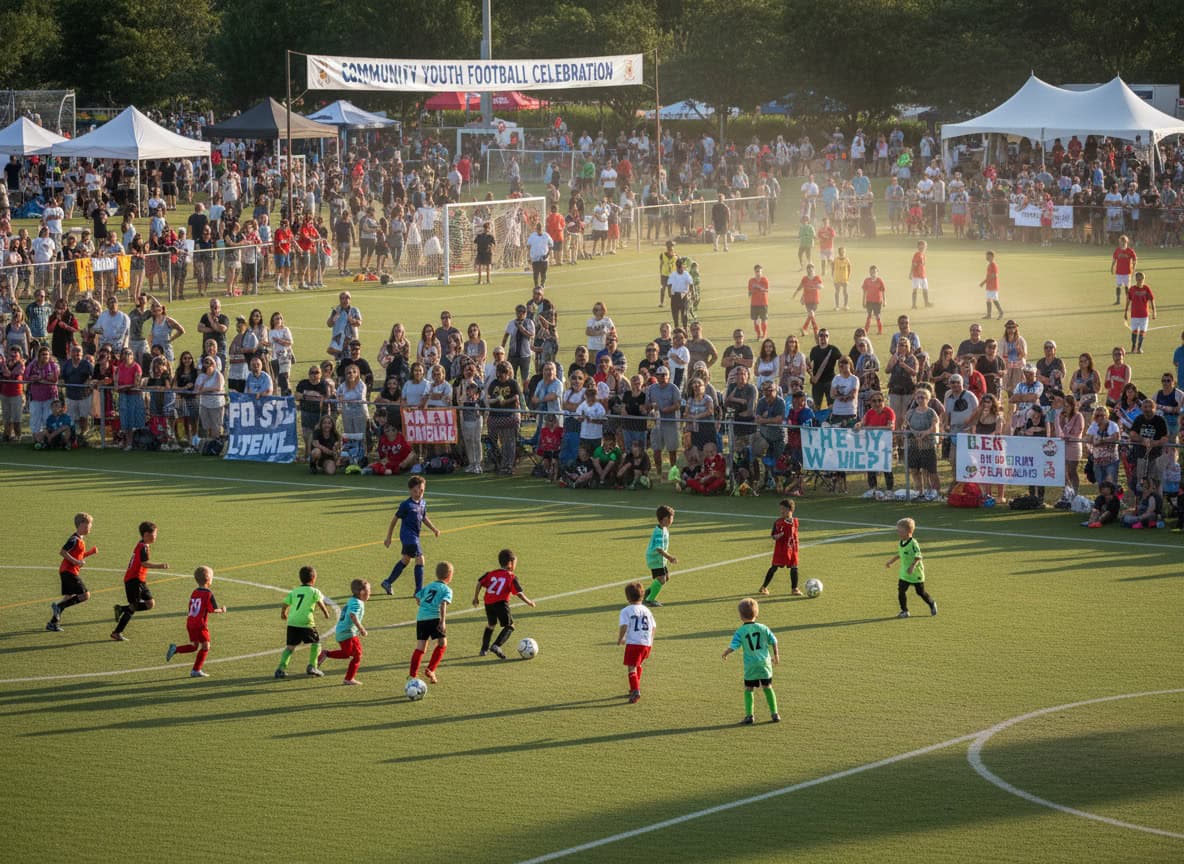
Organizing tournaments or festivals involving several age groups:
| Element | Action |
|---|---|
| Scheduling | Stagger start times, allow transitions |
| Pitches | Mark multiple sizes or use flexible layouts |
| Officials | Coordinate referee assignments |
| Registration | Separate sign-in by age group |
| First aid | Central point accessible to all pitches |
| Results | Age-appropriate tracking (informal for younger groups) |
Quick Reference: Age Group Checklist
Before confirming any friendly, verify:
How This Relates to Other Topics
Frequently Asked Questions
What if our U11 team is stronger than most U11s—should we play U12s?
Playing up one age group occasionally can benefit strong teams, but ensure physical safety and communicate clearly with parents. Development-focused opposition at your own age group often serves players better long-term.
How do we handle combined age group teams for friendlies?
Create clear playing time expectations, communicate to both age group parent cohorts, and ensure younger players are not overwhelmed by older teammates or opponents.
Should youth friendlies keep score?
Focus varies by age. Mini soccer de-emphasizes results completely. From U11+, acknowledging scores is natural, but frame them as feedback rather than the main measure of success.
What is the best way to find opponents for less common age groups like U7s?
Use platforms like Team Game Finder filtered by age group, contact local clubs directly, or join regional Facebook groups for grassroots coordinators.
How do we organize friendlies when our club has multiple teams at the same age group?
Coordinate through a club fixtures secretary. Avoid booking opponents on the same dates/times. Consider internal friendlies between squads for convenient match practice.
What format works best for preseason when fitness is low?
Three periods of 20-25 minutes with breaks works well. It allows more recovery time and creates natural substitution windows without disrupting play.
Should referees officiate youth friendlies?
Self-officiating works for younger ages with parental support. From U13+, neutral referees improve match quality and reduce disputes, especially against unfamiliar opponents.
How do we manage a friendly when one team has far more players than the other?
Agree rolling subs, potentially play additional shorter periods, or loan players to the opposition to balance numbers. The goal is maximum meaningful playing time.
What safeguarding requirements differ for youth vs adult friendlies?
Youth matches require DBS-checked coaches, parental consent for travel, photography policies, and supervision ratios. Adult matches have fewer formal requirements but should still follow club safeguarding policies.
How do we handle parents who want their U9 to play in U10 matches?
Playing up should be based on development benefit and physical readiness, not parent preference. Explain your approach and offer to discuss individual circumstances.