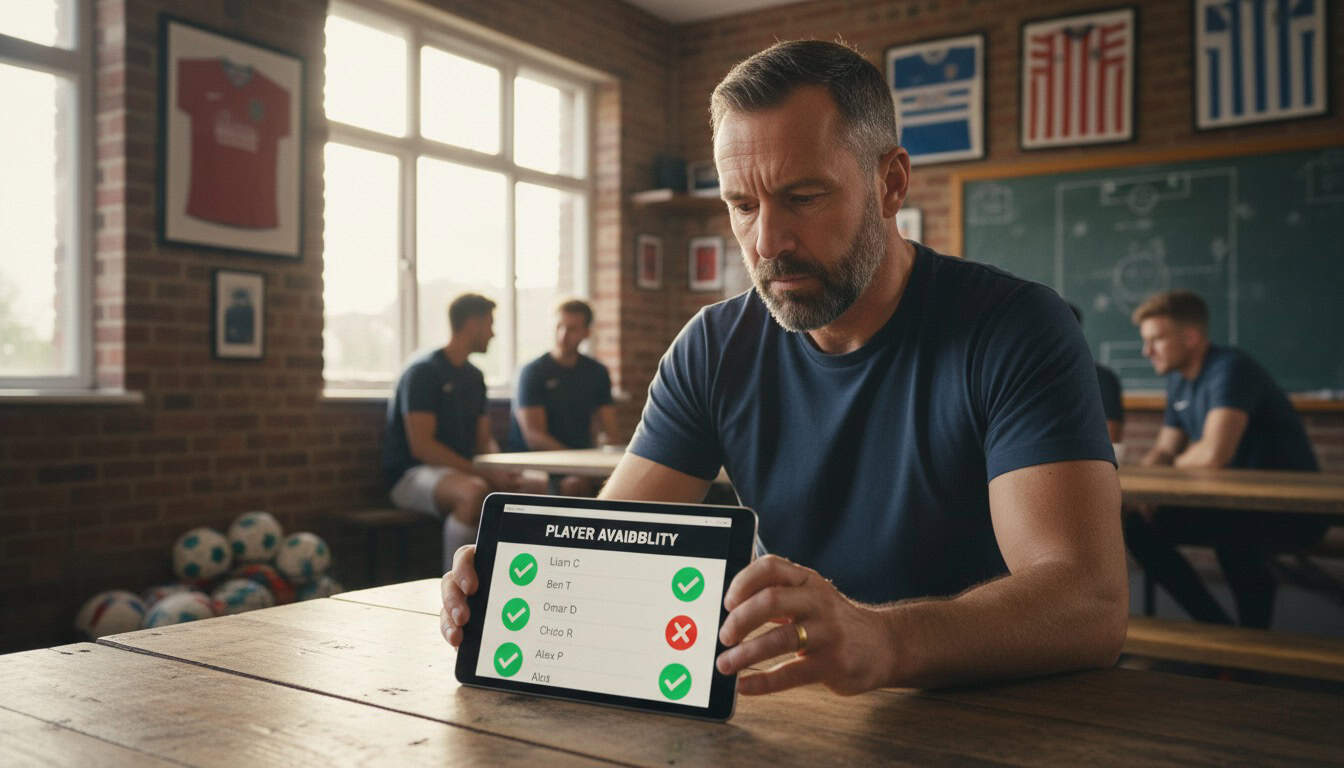
Effective availability management requires consistent collection methods, clear deadlines, and simple response systems. Set expectations early, make responding easy, send timely reminders, and have backup plans for non-responders. The goal is knowing who's available before you need to make selection decisions—not chasing responses the night before a match.
- Consistency wins — Use the same method every time so players build habits around responding
- Make it effortless — The easier you make responding, the higher your response rates will be
- Set clear deadlines — Vague requests get vague responses; specific deadlines get action
Why Availability Management Matters
Every team manager knows the frustration: you need to confirm a squad for Saturday's match, but half the team hasn't responded to your availability request. You're left guessing, chasing, and making last-minute decisions.
Poor availability management creates cascading problems:
- Selection uncertainty — Can't confirm lineups until the last minute
- Match coordination failures — Unable to confirm fixtures without knowing numbers
- Player frustration — Those who respond feel their commitment isn't valued
- Manager burnout — Hours spent chasing responses that should take minutes
- Opponent relationships — Late cancellations damage your reputation
Good availability systems solve these problems before they start.
Setting Expectations from Day One
Establish the Availability Contract
At season start, clearly communicate expectations:
What you need from players:
- Response to every availability request
- Responses by stated deadlines
- Updates if circumstances change
- Honest answers (not hopeful maybes)
What players get in return:
- Advance notice of fixtures
- Fair selection based on availability and commitment
- Respect for their time outside football
- Clear communication about decisions
Make it explicit: Include availability expectations in your team handbook, registration process, or first team meeting. When everyone understands the system from the start, compliance improves dramatically.
Define Response Options
Keep options simple and clear. A three-option system works well:
- Available — I can play
- Unavailable — I cannot play
- Uncertain — I don't know yet (with expected decision date)
Avoid too many options that confuse, "maybe" without follow-up commitment, or partial availability without explanation.
Choosing Your Collection Method
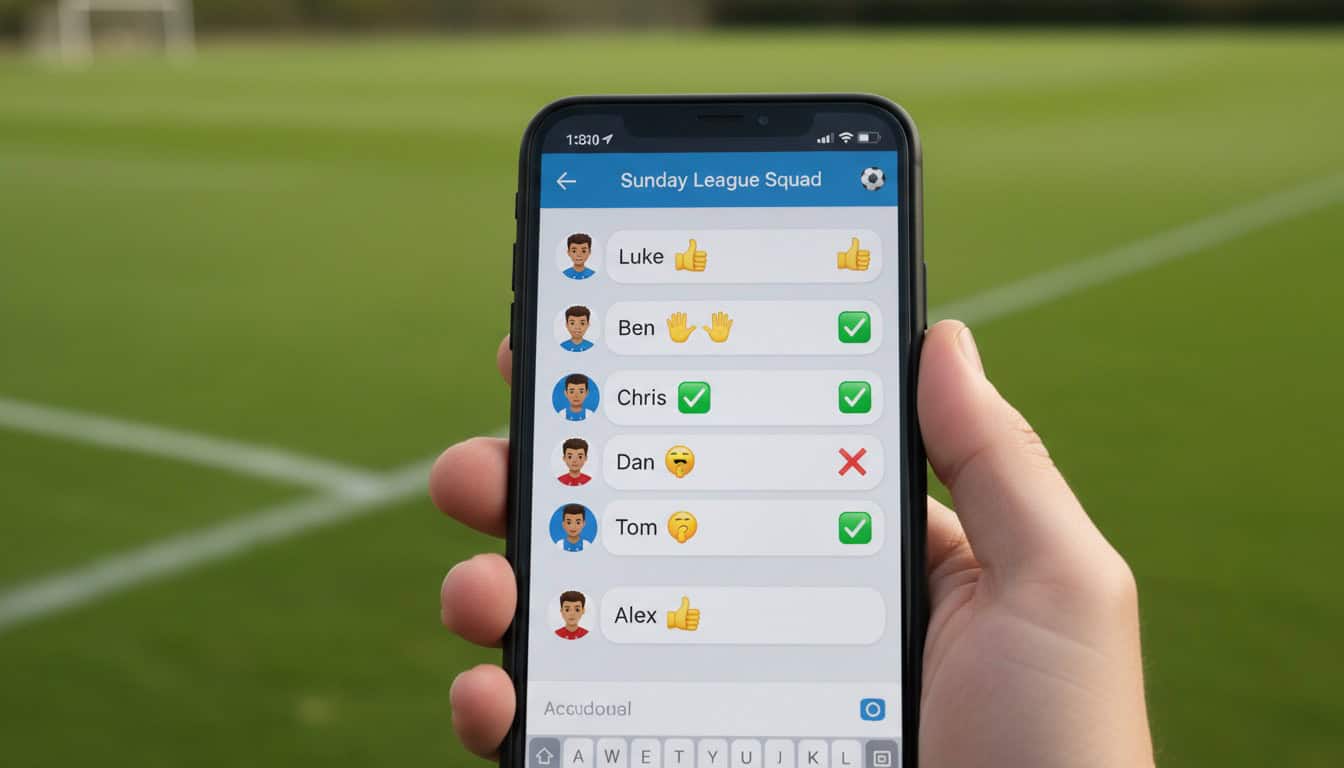
Group Messaging (WhatsApp, Team Apps)
How it works: Post availability request in group chat; players respond with emoji or text.
Pros: Everyone has the app already, immediate visibility of responses, easy reminders in same thread, free.
Cons: Responses get lost in chat scroll, manual tracking required, no automatic tallying, can feel informal.
Best for: Small squads, casual teams, simple yes/no needs.
Tips for success: Pin availability posts, use reaction emojis for responses, summarize responses periodically, set chat rules about response format.
Dedicated Availability Tools
How it works: Purpose-built apps send requests and collect/display responses automatically.
Pros: Automatic response tracking, clear dashboards showing who's responded, reminder automation, historical data.
Cons: Requires players to use another app, may have subscription costs, learning curve for setup.
Best for: Larger squads, multiple teams, managers wanting automation.
Spreadsheet/Form Systems
How it works: Share a form or spreadsheet where players mark their availability.
Pros: Customizable to your needs, data exportable and analyzable, works with tools people know, free or low-cost.
Cons: Requires manual setup, players must remember to check/update, less notification capability.
Best for: Organized managers comfortable with spreadsheets, teams wanting data control.
Hybrid Approaches
Many managers combine methods:
- Primary: Dedicated app for systematic collection
- Reminders: Group chat for nudges and updates
- Backup: Direct contact for non-responders
Find what works for your team culture and stick with it.
Timing Your Requests
The Availability Window
Too early: Players can't predict schedules far in advance; responses are unreliable.
Too late: Not enough time to plan, chase responses, or arrange alternatives.
Sweet spot: 5-7 days before the fixture.
Example Timeline
| Day | Action |
|---|---|
| Day -7 | Send availability request |
| Day -5 | First reminder to non-responders |
| Day -3 | Final reminder; deadline |
| Day -2 | Chase any remaining non-responses |
| Day -1 | Confirm squad |
| Day 0 | Match day |
Adjusting for Your Context
Shorter notice acceptable when: Players have predictable schedules, high squad commitment culture, backup players readily available, informal or recreational setting.
Longer notice needed when: Players have variable work patterns, family commitments require advance planning, travel arrangements needed, youth teams (parent coordination).
Recurring Fixtures
For regular weekly matches, you have options:
- Weekly requests: Fresh request each week—accounts for changing circumstances but more work for manager
- Standing availability: Players indicate ongoing availability, only report exceptions/changes—less noise but requires discipline
- Monthly collection: Request availability for the month ahead, plan around known absences, update weekly as needed
Crafting Effective Requests
What to Include
Every availability request should contain:
Essential information:
- Date and time of fixture
- Opponent (if known)
- Venue (home/away/neutral)
- Response deadline
- How to respond
Helpful additions:
- Meet time and location
- Transport arrangements
- Kit requirements
- Any special circumstances
Example Request Template:
AVAILABILITY: Saturday 25th Jan
vs. Riverside FC (Away)
KO 2pm, meet 1pm at clubhouse
Riverside Sports Ground
Please respond by Wednesday 10pm:
Available | Unavailable | Uncertain
Thanks!
Writing Tips
- Be specific — Dates, times, venues, deadlines
- Be concise — Essential information only
- Be consistent — Same format every time
- Be positive — Appreciate responses, don't scold non-responders publicly
Managing Non-Responders
Why People Don't Respond
Understanding helps you address the real issues:
- Forgetfulness: Saw it, meant to respond, forgot → Solution: Reminders, easier response methods
- Uncertainty: Don't know yet, avoiding commitment → Solution: "Uncertain" option with follow-up date
- Disengagement: Not prioritizing team communication → Solution: Direct conversation about commitment
- Technical issues: Didn't see message, notifications off → Solution: Confirm communication channels work
- Avoidance: Don't want to commit either way → Solution: Clear expectations about response requirements
Reminder Strategies
First reminder (Day -5): Friendly nudge to the group highlighting who hasn't responded yet. "Quick reminder—still need responses from: [names]. Please let me know by Wednesday!"
Final reminder (Day -3): Direct message to individuals who haven't responded. "Hi [name], I haven't heard from you about Saturday's match. Are you available? Need to know by tonight please."
Last resort (Day -2): Phone call or in-person conversation. "I need to finalize the squad. If I don't hear from you by [time], I'll assume you're unavailable."
Setting Consequences
For persistent non-responders, clear consequences help:
- First instance: Gentle reminder about expectations
- Repeated: Private conversation about commitment
- Ongoing: Selection priority given to reliable responders
- Extreme: Consider whether player is committed to the team
Frame positively: "Players who confirm availability by deadline get selection priority" works better than threats.
Tracking and Using Data
Simple Tracking System
At minimum, track response rates per player across weeks. This shows you who's reliable in responding, patterns of availability, and players who need follow-up.
Using Availability Data
For selection: Prioritize players who respond consistently, know typical availability patterns, plan around predictable absences.
For squad planning: Identify position coverage gaps, recognize when recruitment is needed, balance squad across likely availability.
For fixture coordination: Predict likely squad size before confirming matches, identify dates with known availability problems, avoid scheduling conflicts where possible.
Special Situations
Holiday Periods
School holidays, bank holidays, and festive periods need different approaches. Collect availability early (2-3 weeks ahead for holiday fixtures), expect lower numbers and consider whether to schedule matches, and be flexible with family commitments.
Work Pattern Challenges
Teams with shift workers or variable schedules need flexibility. Understand which players work weekends or have rotating shifts, offer flexible deadlines for those who may not know until rotas are published, and use direct contact for those missing group messages during work.
Youth Teams
Parent coordination adds complexity. Communicate availability requests to parents (the people who control schedules), give earlier notice since families need more time to coordinate logistics, and consider transport—availability may depend on parent ability to transport.
Multi-Team Players
Players registered for multiple squads need coordination. Establish which team has first call, communicate between managers to share availability information, and make it the player's responsibility to flag conflicts proactively.
Building Availability Culture
Lead by Example
Manager behaviors that help: send requests on time every time, respond promptly to player questions, update when plans change, thank people for responding.
Recognize Good Behavior
Positive reinforcement works: acknowledge players who respond quickly, thank the team when response rates are high, highlight reliability as a valued trait.
Address Issues Early
Don't let problems fester. Have conversations early about non-response, be direct but supportive, understand individual circumstances, and maintain standards while showing empathy.
Make It Part of Team Identity
Create shared ownership: "We're a team that communicates well." Players remind each other, responding becomes habitual, everyone values the system.
Technology Tips
Notification Management
Help players never miss requests by advising them to: enable notifications for team communication apps, star or pin team conversations, set do-not-disturb exceptions for team contacts, check team channels at regular times.
Automation Options
- Scheduled messages: Send availability requests and reminders at optimal times automatically
- Response tracking: Use tools that automatically show who's responded
- Calendar integration: Sync fixtures to personal calendars so players see upcoming commitments
Backup Systems
When technology fails: have phone numbers for direct contact, know who can relay messages, don't rely solely on one platform.
How This Relates to Other Topics
- Managing Multiple Squads — Multi-team organizations need coordinated availability systems across all squads
- Youth Academy Match Scheduling — Youth teams require parent-focused availability collection
- Friendly Match Organization — Availability data helps you confirm fixtures confidently
- Team Manager Responsibilities — Availability management is a core ongoing task for all managers
Summary
Effective availability management transforms match preparation from stressful chaos to smooth routine. Set clear expectations from day one, choose collection methods that suit your team, and maintain consistent timing and follow-up processes.
The goal is simple: know who's available before you need to make decisions. When players understand the system, responding becomes habitual. When managers are consistent, players trust the process.
Build a culture where availability communication is valued, not nagged. Recognize reliable responders, address issues early, and make responding as easy as possible. The time you invest in good availability systems pays back many times over in reduced stress and better-organized matches.