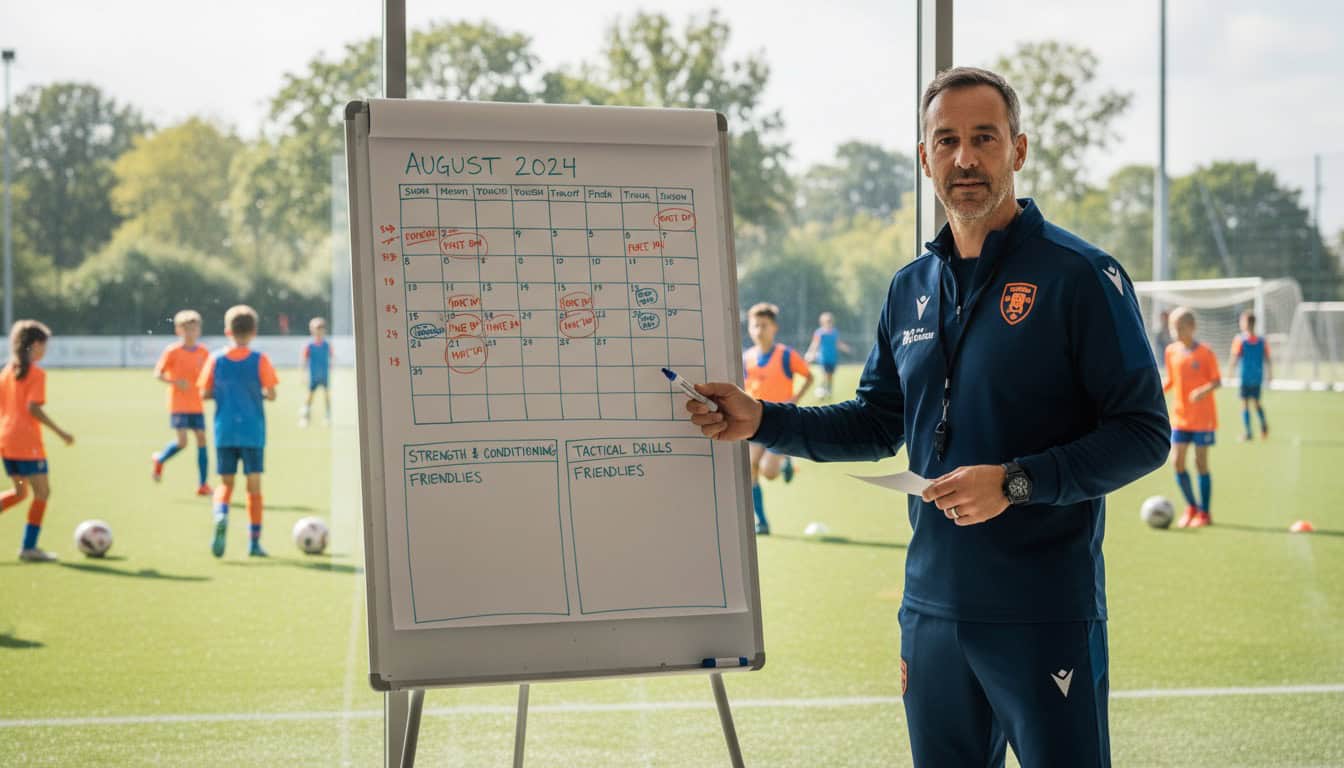
A well-planned preseason friendly schedule includes 4-8 matches spread over 4-6 weeks, with intensity building progressively from fitness-focused games to competitive simulations. The optimal timing places your first friendly 2 weeks into preseason training and your final match 7-10 days before the season opener.
Key Takeaways
- Match volume — Most teams benefit from 4-8 preseason friendlies, with youth teams at the lower end and senior squads at the higher end
- Progressive intensity — Start with development-focused matches and build toward competitive simulations closer to season start
- Recovery buffer — Schedule your final friendly 7-10 days before the first league match to allow full squad recovery
Why Preseason Friendlies Matter
Preseason friendlies serve purposes that training sessions alone cannot provide. They offer match fitness conditioning, tactical implementation under pressure, and squad evaluation in competitive environments. Teams that skip preseason fixtures often struggle in early league matches as players adjust to match intensity.
The challenge for team managers isn't whether to schedule friendlies—it's determining the right number, timing, and opponent selection to maximize preparation without overloading players before the competitive season begins.
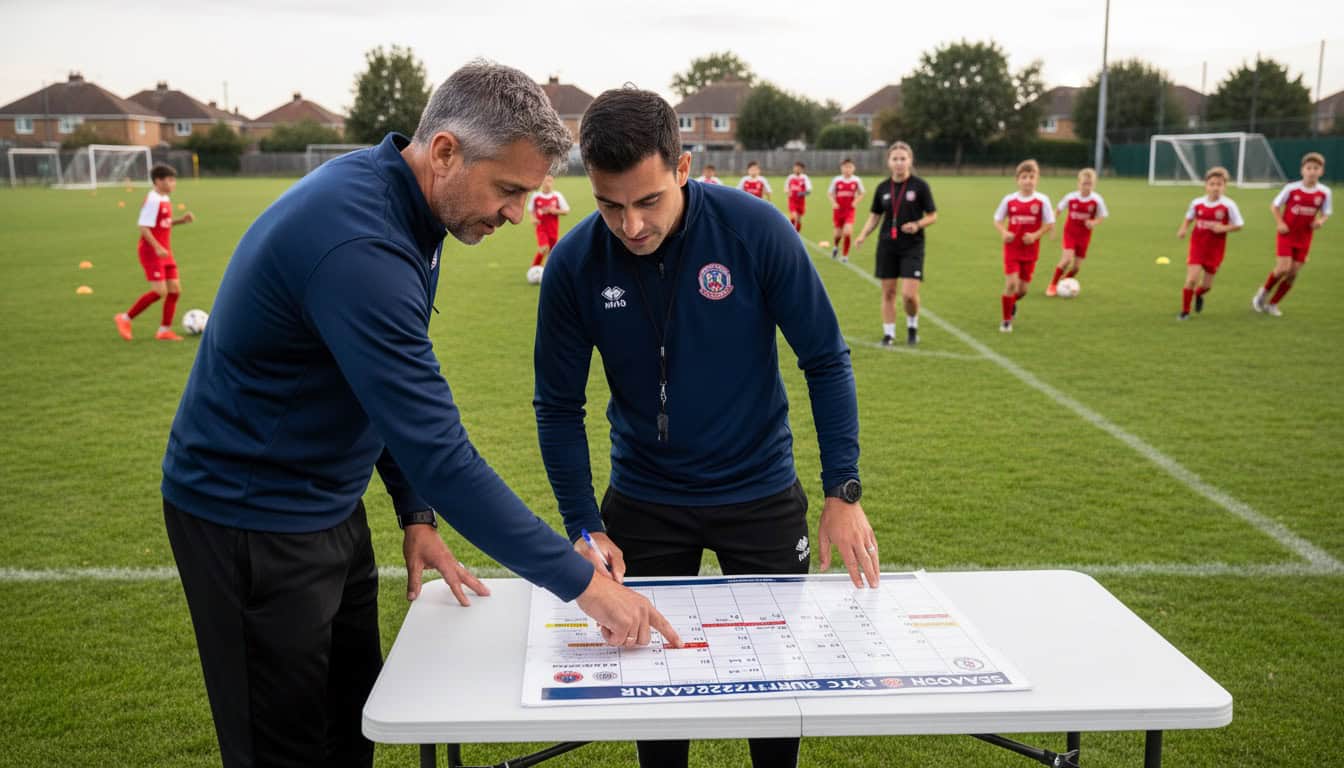
How Many Preseason Friendlies Should You Schedule?
Recommended Match Volume by Team Type
| Team Type | Recommended Matches | Reasoning |
|---|---|---|
| Youth (U12 and below) | 2-4 | Focus on development, manage young player fatigue |
| Youth (U13-U18) | 4-6 | Build match fitness, test formations |
| Senior recreational | 3-5 | Balance fitness with player availability |
| Senior competitive | 5-8 | Full tactical preparation, squad rotation |
| Semi-professional | 6-10 | Extended preparation, trialist evaluation |
Factors That Influence Match Volume
Squad size affects how many friendlies you can sustain. A squad of 15-18 players can handle 4-5 matches with adequate rotation. Squads of 20+ players benefit from additional fixtures to give everyone meaningful playing time.
Training frequency determines fitness baseline. Teams training 3+ times weekly can support more matches than those meeting once or twice per week.
Opponent availability impacts scheduling flexibility. Starting your search early through match-finding platforms ensures you secure preferred dates before slots fill.
When to Schedule Your Preseason Friendlies
The 6-Week Preseason Timeline
A typical 6-week preseason preparation follows this progression:
Weeks 1-2: Foundation Phase
- Focus: Fitness base, basic tactical work
- Matches: 0-1 friendly (light, development-focused)
- Opponent level: Below your typical competition
Weeks 3-4: Development Phase
- Focus: Pattern play, unit combinations
- Matches: 2-3 friendlies
- Opponent level: Similar to your competitive level
Weeks 5-6: Competition Preparation
- Focus: Match sharpness, set pieces, tactical refinement
- Matches: 2-3 friendlies (one high-intensity)
- Opponent level: At or slightly above your level
Critical Timing Guidelines
First friendly: Schedule no earlier than 10-14 days into preseason. Players need baseline fitness before match demands.
Final friendly: Complete 7-10 days before your season opener. This provides recovery time while maintaining match sharpness.
Match spacing: Allow 4-7 days between friendlies. Closer spacing risks fatigue; longer gaps lose momentum.
Building Your Preseason Schedule: Step by Step
Step 1: Mark Your Fixed Dates
Start with non-negotiables:
- Season start date (work backward from here)
- Preseason training start date
- Any scheduled tournaments or events
- School holidays or known absences (for youth teams)
Step 2: Calculate Available Windows
With fixed dates established, identify your friendly match windows:
Season starts: September 7
Final friendly deadline: August 28 (10 days before)
Preseason training starts: July 14
First friendly earliest: July 28 (2 weeks into training)
Available window: July 28 - August 28 (32 days)
Step 3: Map Match Progression
Within your window, schedule matches that progress in intensity:
| Match # | Week | Opponent Type | Focus |
|---|---|---|---|
| 1 | 3 | Lower level | Minutes for all, basic shape |
| 2 | 4 | Similar level | First team combinations |
| 3 | 4 | Similar level | Rotation players' minutes |
| 4 | 5 | Competitive | Match simulation |
| 5 | 5 | Competitive | Set pieces, tactical detail |
| 6 | 6 | High quality | Season dress rehearsal |
Step 4: Secure Opponents Early
Begin finding opponents 6-8 weeks before your preseason starts. Post your availability on match-finding platforms, contact local leagues, and reach out to clubs you've played previously.
Timing Tip
Teams seeking friendlies during the same preseason window creates high demand. Early planning secures your preferred opponents and dates.
Opponent Selection Strategy
Match Your Objectives to Opponent Level
Each friendly should serve a specific purpose. Your opponent selection should align:
Development-focused matches (early preseason)
- Opponents slightly below your competitive level
- Allows experimenting with formations
- Builds confidence entering the season
- Gives fringe players extended minutes
Competitive simulation matches (mid-preseason)
- Opponents at your expected league level
- Tests tactical approach against realistic opposition
- Identifies areas needing work
- First team plays extended periods
High-intensity preparation (late preseason)
- Opponents at or above your level
- Full match simulation with regular starters
- Final tactical adjustments
- Builds competitive mentality
The Importance of Variety
Scheduling opponents with different playing styles prepares your team for league diversity:
- At least one possession-based opponent
- At least one direct/physical opponent
- At least one team using formations you'll face regularly
Managing Minutes and Rotation
Sample Playing Time Distribution
For a 6-match preseason with a 22-player squad:
| Player Group | Matches 1-2 | Matches 3-4 | Matches 5-6 |
|---|---|---|---|
| Starting XI candidates | 45-60 min | 60-75 min | 75-90 min |
| Rotation players | 60-90 min | 45-60 min | 30-45 min |
| Development players | 30-45 min | 20-30 min | Limited |
| New signings/trialists | 45-60 min | 60-75 min | Per performance |
Tracking and Documentation
Keep records of:
- Minutes played per player per match
- Position combinations tested
- Tactical observations
- Injury or fitness concerns
This data informs final squad selection and opening match lineup decisions.
Ready to find matches?
Join verified teams finding friendly matches in minutes, not days.
Common Preseason Scheduling Mistakes
Mistake 1: Starting Too Intense
Teams eager to compete schedule challenging opponents immediately. Without a fitness foundation, this leads to injuries and poor performances that damage confidence.
Better approach: Build intensity progressively. Your first friendly should feel comfortable—a confidence-builder, not a test.
Mistake 2: Insufficient Recovery Before Season
Scheduling a tough friendly 3-4 days before the season opener leaves players fatigued for matches that count. The final week should focus on sharpness work and recovery, not additional match load.
Better approach: Complete your final friendly at least 7 days before the season starts. Use remaining time for tactical polish and recovery.
Mistake 3: Ignoring Squad Balance
Focusing preseason on first-choice players leaves rotation options underprepared. When injuries or suspensions occur early in the season, depth players struggle without meaningful preseason minutes.
Better approach: Deliberately schedule early friendlies for squad depth. Use later matches for first-team preparation.
Mistake 4: Reactive Scheduling
Waiting until preseason begins to find opponents limits options. Teams end up with mismatched fixtures—either too easy or too difficult—because preferred opponents booked elsewhere.
Better approach: Begin opponent search 6-8 weeks before preseason. Use dedicated platforms to find teams actively seeking matches during your window.
How This Relates to Team Management
Preseason friendly scheduling is one piece of the complete team management puzzle. Effective preseason preparation requires coordination across multiple areas:
Finding opponents — Before scheduling, you need quality opponents. Our guide on finding opponents for friendly matches covers the most effective methods.
Season planning — Preseason is just the beginning. See our season planning guide for month-by-month preparation throughout the year.
Player availability — Preseason often coincides with vacation periods. Managing player availability ensures you know who's available for each fixture.
Preseason Scheduling Checklist
Before finalizing your preseason friendly schedule, verify:
Timing
- First friendly scheduled 2+ weeks into training
- Final friendly completed 7+ days before season
- 4-7 days spacing between matches
- No conflicts with key training sessions or events
Volume
- Match count appropriate for team level
- Squad size supports planned matches
- Recovery periods built into schedule
Progression
- Early matches lower intensity
- Mid-preseason matches at competitive level
- Late matches simulate league competition
Logistics
- All matches confirmed with opponents
- Venues secured for home fixtures
- Away travel arranged where needed
- Officials booked if required
Frequently Asked Questions
How many preseason friendlies should a football team play?
Most teams benefit from 4-8 preseason friendlies. Youth teams typically need 2-4 matches, while senior competitive teams may schedule 6-8 to fully prepare their squad.
When should you schedule your first preseason friendly?
Schedule your first friendly match 10-14 days into preseason training. This allows players to build baseline fitness before facing match demands.
How close to the season should your last friendly be?
Complete your final preseason friendly 7-10 days before your first competitive match. This provides adequate recovery time while maintaining match sharpness.
How many days should you leave between preseason friendlies?
Allow 4-7 days between preseason matches. Closer spacing risks accumulated fatigue, while longer gaps can disrupt momentum and match fitness development.
Should preseason friendlies be easier or harder than league games?
Both. Start with opponents below your competitive level for fitness building, progress to similar-level opponents for tactical work, and finish with challenging opponents.
What is the purpose of preseason friendlies?
Preseason friendlies build match fitness, implement tactical systems under pressure, evaluate squad options, and prepare players mentally for competitive football.
Can you play too many preseason friendlies?
Yes. Exceeding 8-10 matches risks player fatigue before the season begins. Each friendly should serve a specific preparation purpose rather than filling the calendar.
How do you schedule preseason friendlies if you have a small squad?
With smaller squads (15-18 players), limit friendlies to 4-5 matches with adequate recovery between. Ensure rotation so all players get meaningful minutes.
When should you start looking for preseason opponents?
Begin your opponent search 6-8 weeks before preseason starts. Early planning secures preferred dates and opponents before other teams fill the available slots.
Should you track player minutes during preseason friendlies?
Yes. Tracking minutes ensures proper rotation, prevents overload of key players, and guarantees all squad members receive adequate preparation playing time.
Ready to find your next match?
Join verified teams finding opponents in minutes.
Create your free accountNo credit card required